
Updated August 17, 2026. San Diego County is investigating a Salmonella outbreak linked to food from the deli at Ramona Family Naturals Market in Ramona, California. The outbreak has grown to 21 illnesses and at least seven hospitalizations.
Investigators say the deli used raw, unpasteurized eggs from Happy Hens in Ramona to make mayonnaise. That mayonnaise was used in foods including chicken salads and Ramona Red Sauce.
Laboratory testing shows the Salmonella bacteria found in outbreak patients are closely related, which means the illnesses are likely connected. Health officials are also investigating people infected with the same strain who did not eat at Ramona Family Naturals Market. This could mean the outbreak extends beyond the deli and may involve a broader source connected to the eggs.
The San Diego County outbreak investigation is ongoing. Ramona Family Naturals Market stopped using raw, unpasteurized eggs in its food products after the outbreak was identified.
Pritzker Hageman’s national food safety lawyers are investigating illnesses connected to the Ramona Salmonella outbreak. If you were diagnosed with Salmonella after eating at the deli, contact contact the Pritzker Hageman Salmonella Legal Team for a free consultation.
Do You Need a Salmonella Lawyer?
Ramona Salmonella Outbreak at a Glance
- Restaurant: Ramona Family Naturals Market deli in Ramona, California
- Illnesses: 21 confirmed and probable cases
- Hospitalizations: At least 7
- Patient ages: 27 to 60
- Illnesses reported since: June 21, 2026
- Food first identified: Mayonnaise made with raw, unpasteurized eggs
- Egg supplier identified by investigators: Happy Hens in Ramona, California
- Laboratory finding: Outbreak cases are linked by whole-genome sequencing
- Investigation scope: Additional infections with the same strain are being investigated in people without a known Ramona Family Naturals exposure
- Status: Investigation ongoing
What San Diego County Has Reported
The investigation began after people who ate food from the Ramona Family Naturals Market deli became sick with Salmonella. San Diego County initially reported 13 confirmed and probable cases and four hospitalizations, with illnesses linked to mayonnaise made with raw, unpasteurized eggs. The market stopped using raw eggs in its food products after the outbreak was identified.
The outbreak has since grown to 21 illnesses and at least seven hospitalizations. Investigators identified Happy Hens as the supplier of the eggs used by the deli. Whole-genome sequencing shows the outbreak cases are closely related. Health officials are also investigating additional people infected with the same Salmonella strain who do not have a known connection to Ramona Family Naturals Market.
This outbreak is separate from the multistate Salmonella Enteritidis outbreak linked to recalled shell eggs from Midwest Poultry Services. San Diego County says the Salmonella strain involved in the Ramona outbreak is not linked to that outbreak.
Happy Hens Eggs Identified in Salmonella Investigation
San Diego County investigators have identified Happy Hens in Ramona as the supplier of the raw shell eggs used by Ramona Family Naturals Market.
Identifying the egg supplier is an important step in the investigation because it allows health officials to trace the eggs backward to their source and determine where else eggs from the same supplier may have been distributed.
According to California Department of Food and Agriculture records, Eben-Haezer’s Happy Hens is listed as a registered egg handler in Ramona. Happy Hens states that its pasture-raised eggs are sold through its farm store and at other locations in Southern California.
The investigation has also expanded beyond people who ate at Ramona Family Naturals Market. San Diego County is investigating additional people infected with the same Salmonella strain who do not have a known connection to the deli.
Whole-genome sequencing shows that the Salmonella bacteria found in outbreak patients are closely related. This type of laboratory testing acts like a genetic fingerprint. When people with matching strains report different exposures, investigators look for something they may have had in common, such as the same food product, producer, supplier, or distributor.
Why the Egg Traceback Matters
Investigators may review invoices, purchase records, delivery records, lot information, supplier records, distribution records, and laboratory results to determine where the eggs came from and where else they may have been sold.
That evidence can also become important in a Salmonella lawsuit. A foodborne illness claim may involve the restaurant that prepared or served the food, the company that supplied or distributed an ingredient, the producer, or multiple businesses in the supply chain.
Why Raw Egg Mayonnaise Can Spread Salmonella
Raw shell eggs can contain Salmonella even when they look clean and unbroken. Mayonnaise and similar sauces may be served without a cooking step that would kill the bacteria. If contaminated raw eggs are mixed into a ready-to-eat food, Salmonella can be distributed throughout the batch and reach multiple customers.
The FDA advises restaurants and food-service operations to substitute pasteurized eggs or pasteurized egg products for raw shell eggs when making mayonnaise and other foods that are not thoroughly cooked. Pasteurization is designed to reduce dangerous bacteria while allowing the egg product to be used in recipes that would otherwise call for raw eggs.
Eggs have caused other serious Salmonella outbreaks, including a 2025 outbreak linked to organic eggs that included restaurant illness clusters. The Ramona investigation underscores why restaurants should use pasteurized eggs in uncooked sauces and follow strict refrigeration, sanitation, and cross-contamination controls.
Salmonella Symptoms and When to Seek Medical Care
Salmonella symptoms usually begin six hours to six days after infection and typically last four to seven days. Symptoms may include:
- Watery diarrhea that may contain blood or mucus
- Severe stomach cramps
- Fever
- Nausea or vomiting
- Headache
- Loss of appetite
Contact a healthcare provider promptly if diarrhea or vomiting lasts more than two days, stool or urine is bloody, a fever is higher than 102°F, or signs of dehydration develop. Dehydration signs can include very dark urine, little or no urination, intense thirst, dry mouth, dizziness, or lightheadedness.
Although many people recover, Salmonella can spread beyond the intestines and cause serious complications such as bloodstream infection, meningitis, bone or joint infection, and reactive arthritis. Young children, older adults, and people with weakened immune systems are at increased risk of severe illness.
What Ramona Family Naturals Customers Should Do
People who ate food from the Ramona Family Naturals Market deli and later developed symptoms should take the following steps:
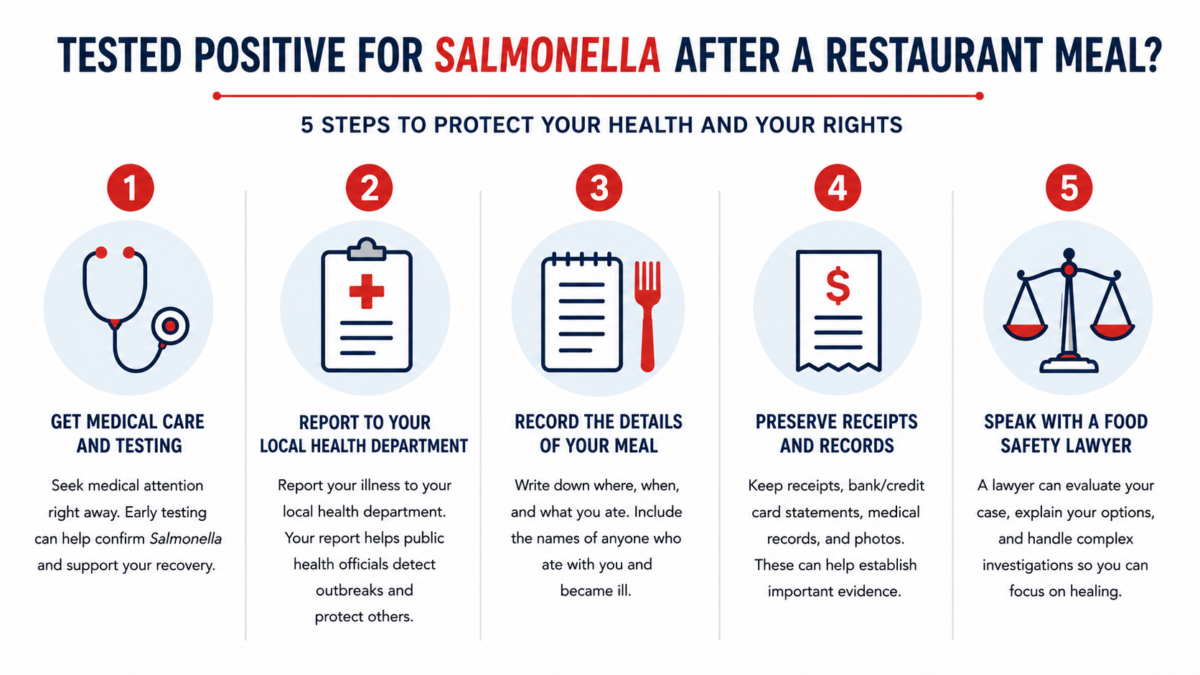
- Seek medical care and ask about testing. Tell the provider when you ate at the deli, what you ate, when symptoms began, and that San Diego County is investigating a Salmonella outbreak. A stool culture or other laboratory testing may help diagnose the illness and connect it to an outbreak.
- Report the illness to San Diego County. The County asks people who are still sick and those who have recovered to report suspected foodborne illness. Call 858-505-6814 or use the San Diego County foodborne illness reporting instructions and form. The completed form can be emailed to [email protected].
- Preserve records. Save receipts, payment-card records, online order confirmations, photos, medical records, and the names of anyone who ate with you. Write down the date and time of the visit and every food or drink consumed while the details are fresh.
- Do not eat suspected leftovers. Keep food sealed and separate from other foods only if a health official or attorney asks you to retain it for possible testing. Otherwise, follow official disposal instructions.
- Document the impact of the illness. Keep track of missed work, medical bills, medications, travel for care, continuing symptoms, and any follow-up treatment.
Can You File a Ramona Deli Salmonella Lawsuit?
A person diagnosed with Salmonella after eating at the Ramona Family Naturals Market deli may have a legal claim if the evidence connects the illness to the restaurant or an implicated food. Whether someone can sue a restaurant for food poisoning depends on the facts and the available medical, microbiological, epidemiological, and purchase evidence.
Important evidence may include a positive Salmonella test, the timing of symptoms, a documented deli purchase, interviews conducted by health officials, identification of a common food exposure, laboratory comparisons of bacterial isolates, inspection findings, and traceback information. A public health agency does not always identify every contaminated menu item before a legal investigation begins.
Compensation in a successful Salmonella lawsuit may include medical expenses, lost income, pain and suffering, future care, and losses caused by long-term complications.
How a Salmonella Lawyer Can Help
Restaurant outbreak cases can involve evidence held by the business, food suppliers, laboratories, healthcare providers, and public health agencies. An experienced food poisoning lawyer can move quickly to preserve records, obtain available health-department information, identify all potentially responsible companies, work with scientific experts, and document the full financial and medical impact of the illness.
Pritzker Hageman’s national Salmonella legal team has handled complex foodborne illness cases involving restaurants, grocery stores, food manufacturers, and distributors. The firm’s trial lawyers obtained a $6.5 million jury verdict for a child who suffered permanent brain damage from Salmonella and have secured other significant recoveries for people with severe Salmonella complications.
Contact Pritzker Hageman About the Ramona Salmonella Outbreak
Pritzker Hageman is reviewing claims involving the Ramona Family Naturals Market Salmonella outbreak. A free, confidential consultation can help determine what evidence may be available and whether a legal claim should be investigated.
Call 1-888-377-8900 or text 612-261-0856, or request a free consultation online. There is no fee unless the firm wins compensation for you.
Ramona Deli Salmonella Outbreak FAQ
San Diego County is now investigating 21 illnesses connected to the outbreak, with at least seven hospitalizations. The investigation began with illnesses linked to food from the Ramona Family Naturals Market deli.
Investigators first linked the illnesses to mayonnaise made at the deli with raw, unpasteurized eggs. The County has since identified Happy Hens in Ramona as the supplier of those raw eggs.
Not necessarily. The outbreak was first identified through illnesses associated with the Ramona deli, but investigators are now evaluating additional infections with the same strain in people without a known Ramona Family Naturals exposure.
San Diego County has identified Happy Hens as the supplier of the raw eggs used by the Ramona Family Naturals deli. Officials are also investigating matching Salmonella infections in people who did not report eating at the deli. That does not necessarily mean every Happy Hens egg is contaminated. Consumers should follow the latest County, state, or federal guidance.
As of August 17, 2026, no FDA recall of Happy Hens eggs was identified in the sources reviewed.
No. San Diego County said the Salmonella strain in the Ramona deli outbreak is not related to the separate multistate outbreak associated with recalled Midwest Poultry shell eggs.
Call the San Diego County Food and Housing Division Epidemiology Liaison at 858-505-6814. The County also provides a foodborne illness intake form that can be emailed to [email protected].
Contact a healthcare provider and explain that you ate at a deli connected to an active Salmonella investigation and are experiencing symptoms of a Salmonella infection. The provider can decide whether testing is still medically useful. Report the illness to San Diego County even if you have recovered.
Seek medical care if you become ill and tell your healthcare provider about the possible exposure. Save receipts, order records, egg cartons or packaging, photos, and medical records. Testing may help confirm a Salmonella infection and connect your illness to an outbreak. You should also contact a Salmonella lawyer promptly. Statutes of limitations set deadlines for filing food poisoning claims, and waiting too long could affect your ability to recover compensation.
The Pritzker Hageman law firm and our attorneys have been recognized in:
U.S. News & World Report

Pritzker Hageman has been recognized as one of the best law firms for personal injury litigation by U.S. News & World Report every year the award has been given since 2012.
Super Lawyers®, Thomson Reuters

Attorneys at Pritzker Hageman have been awarded the peer selected Super Lawyers distinction every year since 2004.
America’s Top 100 Attorneys®

Lifetime Achievement selection to America’s Top 100 Attorneys®.
Three Time Attorneys of the Year

Pritzker Hageman lawyers have been named Attorneys Of The Year by Minnesota Lawyer three times.
We have obtained 100+ separate verdicts and settlements greater than $1 million:
Our client suffered substantial injuries after ingesting a defective product.
We obtained this settlement on behalf of a family whose children were sickened with E. coli.
We obtained a $12.15 million settlement on behalf of an 8-year old girl who was sickened in an E. coli outbreak.
We represented seven children who suffered intestinal injuries as a result of a defective food product.
We obtained this settlement on behalf of a 13-year old girl who was sickened with E. coli.
We won this verdict for a child with kidney damage from E. coli in contaminated food.
Our attorneys won this landmark verdict in a case against Foster Poultry Farms. Our client was a 5-year-old child who contracted Salmonella Heidelberg and, as a result, suffered brain damage.
We obtained a settlement from a company that sold contaminated food to our clients, causing the death of unborn children.
Our client suffered severe neurologic injuries as a result of Listeria monocytogenes, a food-borne pathogen.
On behalf of a client who was seriously sicked by food contaminated with Listeria monocytogenes.
See more settlements & verdicts.