
Can a Parent Sue on Behalf of an Injured Child?
Yes, a parent can sue a careless driver or corporate wrongdoer on behalf of an injured child. The lawsuit is filed to get compensation and to hold the responsible party accountable for the harm. Generally, a parent (as legal guardian), is listed as the plaintiff (the person suing). You can call 1-888-377-8900 (toll-free) to talk to one of our lawyers about how our law firm can help your family.
Child Injured in a Traffic Accident
“Children often have a claim for personal injury after a traffic accident,” said Attorney Eric Hageman, father of five and one of our lead child safety lawyers.
The insurance policy of the negligent driver (even if it was a parent) can be sued for pain and suffering, disability, disfigurement, and expenses and losses in excess of the amounts provided under Minnesota no-fault laws.
Eric focuses his practice on accidents with cars, semi-trucks, bicycles, and other vehicles. He was named one of the 2022 Best Lawyers in America in the practice area of Transportation Law. Eric was a lead attorney in multistate litigation (like a class-action lawsuit) against the manufacturer of an ATV. He oversaw pretrial procedures for dozens of attorneys to achieve settlements for injured children and their families.

Contact our Child Safety Lawyers
Child Sickened by E. coli and HUS Kidney Disease
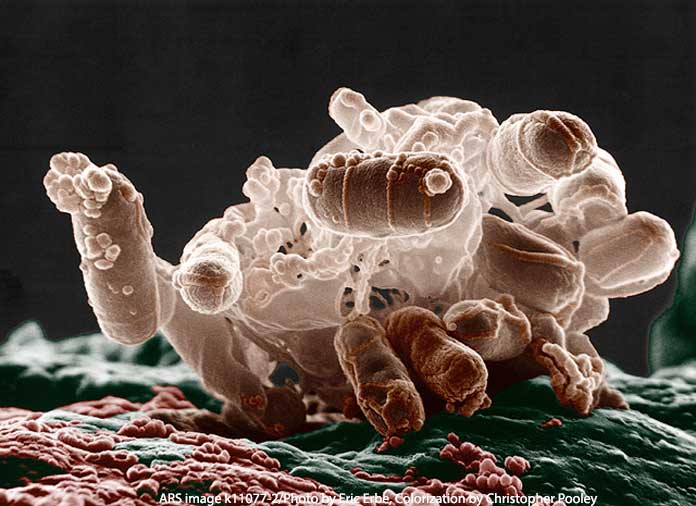
Attorney Eric Hageman and his legal team recently won $1 million for a family who lost a little one who contracted E. coli poisoning at a daycare. Our legal team also won $4.5 million for a woman who contracted E. coli poisoning and then developed hemolytic uremic syndrome (HUS), a severe complication of these infections that causes kidney failure. E. coli-HUS can be fatal. When this happens, the family often has a wrongful death claim and can sue the wrongdoer.
Pritzker Hageman lawyers also represented 7 families whose newborn babies were sickened by a defective food product. We won over $10 million.
Our lawyers are some of the very few in the nation who have successfully represented many children sickened by food poisoning. Most of their cases involve contaminated food, but they have also represented little ones who contracted E. coli from animals at petting zoos, farms, and fairs.
Salmonella can also cause severe harm to little ones. One of our cases involves a baby who consumed a contaminated product and ended up with permanent brain damage.
Baby or Young Child Injured at a Daycare
Daycare centers are liable for any harm that comes to a little one under their care. In some cases, the center is run by one business and the daycare facility is owned by another. Both companies can be liable, depending on the facts of the case.
Some of the questions that will most likely need to be answered include the following:
- What was the adult to child ratio?
- At the time of the accident, what was the exact location of each worker?
- What was the response to the accident?
Read more about daycare injury and wrongful death claims. As discussed above, Attorney Eric Hageman recently won $1 million for a family whose toddler contracted E. coli poisoning at a daycare.
Crib Strangulation and Suffocation
The Consumer Product Safety Commission (CPSC) advises particularly against cribs with decorative corner posts that protrude above the crib edge, which can snag clothing and pacifier cords while infants climb up the corner areas to stand. (The CPSC recommends NEVER tying a pacifier around a little one’s neck for these reasons.)
To prevent your baby from getting strangled on a corner post:
- Get rid of decorative knobs.
- Corner posts should project no more than 1/16 of an inch above the end panel.
Suffocation is one of the biggest hazards prompting crib recalls. It happens most often under circumstances where babies become trapped in a space between the mattress and side rail of the crib, often because hardware fails and the side rail becomes detached. Many reported baby deaths involving cribs have been drop-side crib deaths.
To prevent your baby from being suffocated:
- Tighten all nuts, bolts, and screws periodically.
- Make sure all mattress support hangers are secure.
- Check hooks regularly to be sure none are broken or bent. Open hooks may allow the mattress to fall.
- Use a crib that meets Federal Safety Standards and Industry Voluntary Standards for cribs and has a firm, tight-fitting mattress.
- Check the CPSC children’s product recall list to make sure your crib has not been recalled.
Remove all crib toys which are strung across the crib or playpen area when your baby is beginning to push up on hands or knees or is 5 months of age, whichever occurs first.
Baby Sling and Carrier Suffocations and Falls
Pritzker Hageman is one of the few law firms in the nation that has won money for a family whose baby was suffocated.
There have been several allegations of positional asphyxia (suffocation due to the air passageways being closed when the baby’s head is pushed into the baby’s chest) involving baby slings that look like duffle bags.
In addition, falls from these products have resulted in head injuries, including skull fractures and traumatic brain injury (TBI).
We would recommend the following to protect your baby:
- Use these products according to the manufacturer’s instructions.
- Do not use old baby slings or carriers.
- Check how wide the leg openings are, if there are any, to see if a baby could slip through (it has happened).
- Try to test it out to see if a baby’s head will be pushed into his or her chest if the face could be forced into the fabric, and if the infant could easily fall.
- When broken, throw it out.
For more information, read “Baby Sling Lawsuit for Wrongful Death or Brain Damage” and “Infant Carrier Death Lawsuit.”
Window Blind Cords
According to the U.S. Consumer Product Safety Commission, since 1990, more than 200 infants and young children have died from strangling in window blind cords. CPSC recommends using cordless window coverings in homes with little ones. If you are not able to replace your window coverings, to prevent your little one from being strangled by a window blind cord, either 1) cut the cord above the tassel, remove the equalizer buckle, and add a separate tassel at the end of each cord; or 2) cut the cord above the tassel, remove the equalizer buckle, and add a breakaway tassel which will separate if a baby or toddler becomes entangled in the loop.
Other Products and Safety Tips
- Never leave a child unattended in a stroller because he or she may slip into a leg opening, become entrapped by the head, and die.
- A spring-loaded lid-support device can keep a lid from falling on a neck or from closing and trapping a little one playing inside the chest. This device should be used on all chests that store toys.
- Never tie pacifiers or other items around the neck of a little one. Shirts and jackets have been recalled due to strangulation risk. Strings, cords, necklaces, and other items tied around the neck can strangle infants. In recent years, the CPSC has received reports of two to three deaths annually of little ones under two years old who were strangled by strings, cords, ribbons, or necklaces around their necks. Most of the deaths involved pacifiers tied around the neck. Many of the others involved necklaces. Usually, the string, cord, or necklace became caught on some product such as a crib or playpen. In other cases, the string or cord became tightly wrapped or twisted around the neck.
- Suffocation Hazard CPSC banned the infant cushion in 1992. Destroy any infant cushions still in consumers’ homes. In 1992, it banned infant cushions that were involved in 36 infant suffocations. The Commission took action previously to remove existing products from the marketplace and from consumers. This action stemmed from the concern that other manufacturers might begin production of the same or similar products. A ban of infant cushions can ensure that this product does not reappear in the marketplace. A death that occurred two years after the initial recall announcement underscores that infant cushions not destroyed may find their way back into infant use at a later date.
- Never place infants to sleep on air mattresses. Since 2002, CPSC has received reports of 16 tragic deaths, mostly infants younger than 8 months of age, who were placed to sleep on air mattresses: 11 suffocated in a face-down position on an air mattress and 5 died due to suffocation after falling into gaps between the mattress and bed frame and mattress and adjacent furniture or wall. Even properly inflated air mattresses are usually too soft for infants to maintain a clear airway.
- There have been reports of more than 100 deaths of children under age 2 associated with features of adult beds. These deaths involve an entrapment, a fall, or a situation in which bedding or sleep position was related to the death. Nearly all of those injured, 98%, were babies under 1 year old.
- Defective playpens may not lock securely and may collapse. Parents should always check to make sure the sides of a collapsible playpen are secure before use. If one side unintentionally collapses, the lowered position forms a hazardous “pocket” or “gap” in which the baby may become entrapped.
- Bean bag chairs made with zippers and foam pellets have killed little ones. What happens is the child unzips the bean bag, crawls inside, and inhales or ingests the foam pellets. This causes death by suffocation. Read about a bean bag chair wrongful death lawsuit.
- Small magnets, such as rare-earth magnets found in desk toys (used for playing or modeling different shapes), are deadly if two or more are swallowed. Rare-earth magnets are 10 times stronger than ordinary refrigerator magnets and the number of children ingesting them has been increasing at an alarming rate. According to an investigation by the Washington Post, poison control centers are on track to report about 1600 cases in 2019. This is more than six times the number of cases reported in 2016 when the federal courts lifted the CPSC’s four-year ban on the products. The products are currently regulated under voluntary safety standards, which means the industry largely has the power to regulate itself. Safety advocates say that written warnings and packaging designs meant to reduce accidental digestion are not enough: they think the magnets need to be too big to swallow and too weak to cause organ damage. If two or more rare-earth magnets (each the size of a BB gun pellet) are swallowed, they can pull together the intestines, leading to potentially life-threatening holes and blockages and resulting in emergency surgery.
- Use the child-resistant closures that come on most medicines and household chemicals to prevent personal injury to a child. Safety closures save lives. Safety latches for kitchen, bathroom, and workshop cabinets can help keep household chemicals and medicines locked away from little ones.
- Hundreds are getting hurt in inflatable bouncy houses and castles. These structures become untethered and either roll or fly away. One house flew 20 feet in the air before 2 boys fell out. They were seriously injured. Read about compensation for an inflatable bouncy house injury.
- One study found that 17,230 children under 6 years old had been injured by laundry pods, those single packets of laundry highly concentrated laundry detergent. They may clean clothes, but they have also injured many, many little ones. These products have also been linked to one wrongful death. 79% suffered internal chemical burns when they swallowed the detergent. Read more about Tide pod poisoning.
- Do NOT allow anyone under the age of six to play with uninflated balloons without supervision. Immediately collect the pieces of broken balloons and dispose of them out of reach. Keep small balls and other smooth round objects away from those who have a tendency to put such objects in their mouths.
- Avoid rattles, squeeze toys, teethers, and other toys with ball-shaped ends. Choose handles too large to lodge in a baby’s throat. Rattles intended as decorations do not meet safety guidelines and should never be played with.
- Every year there are a number of toy recalls because small parts can break away and find their way into the mouths of babies and toddlers. If your son or daughter has choked on a toy part, you may have a claim against the toy manufacturer.
- Food like hot dogs and grapes can pose choking hazards. Cut food up into small enough pieces to prevent choking. If your little one chokes at a daycare, you may have a claim against the daycare center and others.
Drowning
Read about how our law firm helped a family whose son drowned in a swimming pool during school.
The U.S. Consumer Product Safety Commission is aware of 66 deaths associated with baby bath seats or rings since 1983. These bath rings usually contain three or four legs with suction cups that attach to the bottom of the tub. However, the suction cups may suddenly release, allowing the bath ring and baby to tip over. A baby may also slip between the legs of the bath ring and become trapped under it. Do not rely on these devices to keep the baby safe in the bath. Parents or other attendants must never leave a baby alone in these bath support rings. Even turning away to answer the doorbell or telephone could result in injury or drowning of the baby.
- NEVER, even for a moment, leave a little one unattended near water.
- Keep little ones away from buckets, toilets, and other containers of water.
- Supervise little ones at all times in the bathtub.
A swimming pool should have a fence or barrier surrounding all four sides with self-closing and self-latching gates. If the house is part of the barrier, all doors leading from the house to the pool should be protected with an alarm. If your child drowned in a swimming pool, you may have a lawsuit against the property owner.
Lead Poisoning
If your child has lead poisoning, the most likely source is lead paint on the walls or ceiling of your residence; however, furniture, toys, and other products can also have lead paint. And imported candy, baby bibs, makeup, and other products have been recalled due to high lead content. There have also been cases of lead poisoning associated with home remedies.
Free Consultation with a Child Safety Attorney
Our lawyers are recognized nationally in the areas of product liability, personal injury, and wrongful death. Attorneys at the firm have been interviewed by The New York Times, The Wall Street Journal, Lawyers USA, and other publications. Our lawyers have spoken at Harvard Law School, Cornell, Northwestern University, and other institutions.
You can contact our lawyers for a free consultation at 1-888-377-8900 or by submitting our free consultation form.
More Information