
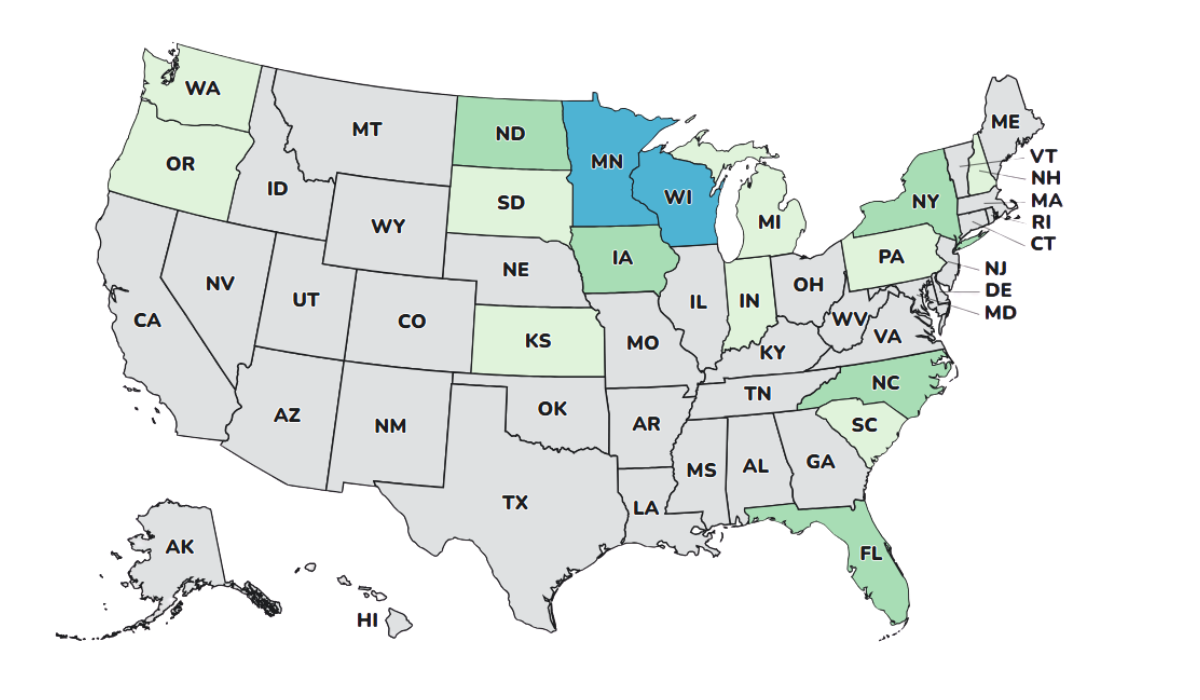
Updated October 2, 2026 – The E. coli and Salmonella outbreak linked to alfalfa sprouts has grown to 76 illnesses in 16 states. According to the CDC’s October 1 outbreak update, six people have been hospitalized and no deaths have been reported. Sixty-four people were infected with Shiga toxin-producing E. coli, nine with Salmonella Agona, and three with both E. coli and Salmonella.
Illnesses began between May 31 and September 7, 2026. Cases have been reported in Florida, Indiana, Iowa, Kansas, Michigan, Minnesota, New Hampshire, New York, North Carolina, North Dakota, Oregon, Pennsylvania, South Carolina, South Dakota, Washington and Wisconsin.
The investigation has also identified a broader source than the finished Everything Sprouts products. CDC says epidemiologic and traceback data show that recalled alfalfa seed lot SAL2-24JB may be contaminated with multiple pathogens and may be making people sick. FDA previously traced the implicated seed lot to Everything Sprouts and at least one additional sprout grower. FDA enforcement records identify International Sprout Holdings, Inc. of Cookeville, Tennessee as the recalling firm for lot SAL2-24JB, sold under the International Specialty Supply name.
Everything Sprouts and Calco alfalfa sprouts remain a documented source of illnesses in the outbreak, but the investigation extends beyond those brands. The recalled seed lot was distributed to sprout growers and wholesale distributors in 16 states and Puerto Rico and was also shipped internationally. Sprouts grown from the recalled seed should have been recalled and should no longer be available for sale.
If you or a family member became sick after eating alfalfa sprouts, seek appropriate medical care and ask about testing for STEC E. coli or Salmonella. Pritzker Hageman’s E. coli lawyers and Salmonella lawyers represent people seriously harmed in foodborne illness outbreaks nationwide.
Do You Need an E. coli or Salmonella Lawyer?
Which Everything Sprouts and Calco Alfalfa Sprouts were recalled?
FDA said on August 21 that it had recommended Everything Sprouts conduct a recall. Everything Sprouts posted a voluntary recall notice dated August 21, 2026 on its own website for certain alfalfa sprouts distributed to third-party distributors and retail grocery stores in Minnesota and Wisconsin.
That original company notice did not provide consumers with all of the information needed to determine whether a package was covered by the recall. It listed no lot numbers for consumers to compare against sprouts they had purchased. The notice also named only the Everything Sprouts brand, even though FDA, CDC and Minnesota health officials were warning consumers not to eat alfalfa sprouts sold under either the Everything Sprouts or Calco brand.
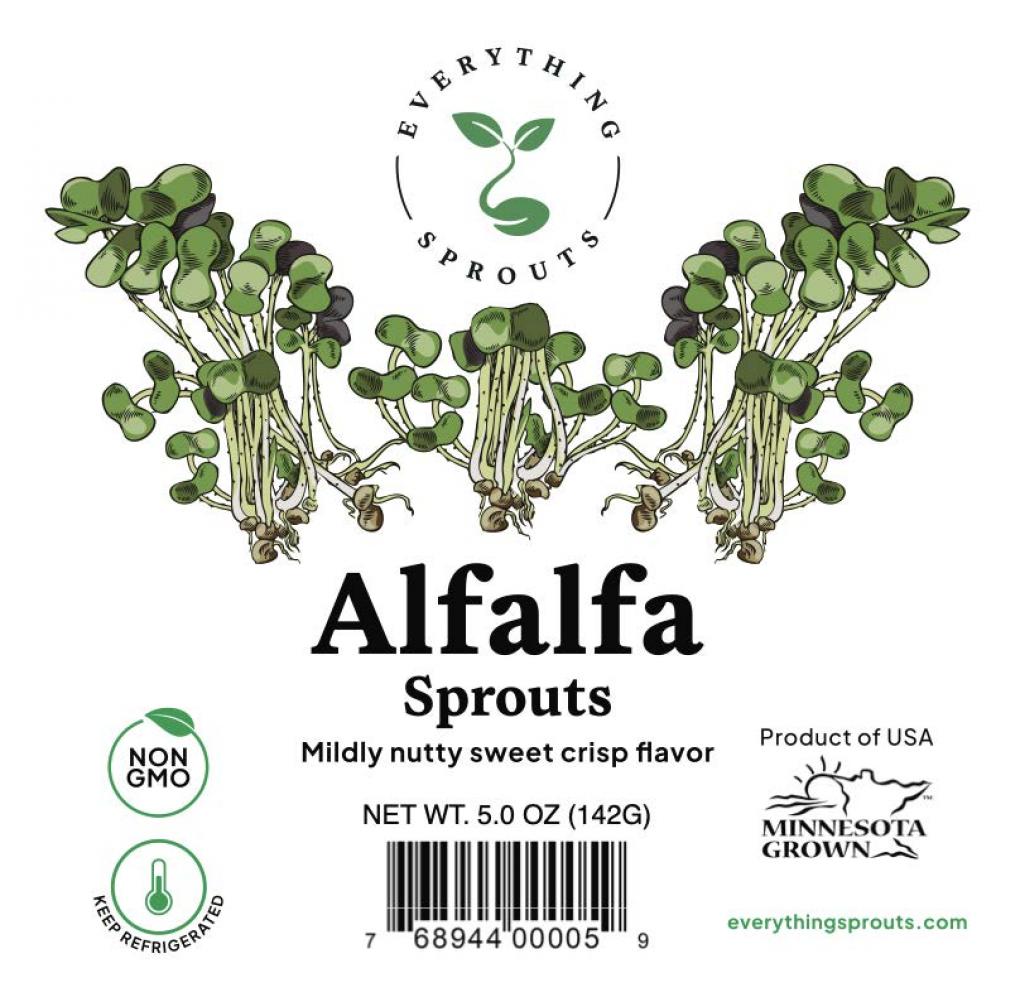
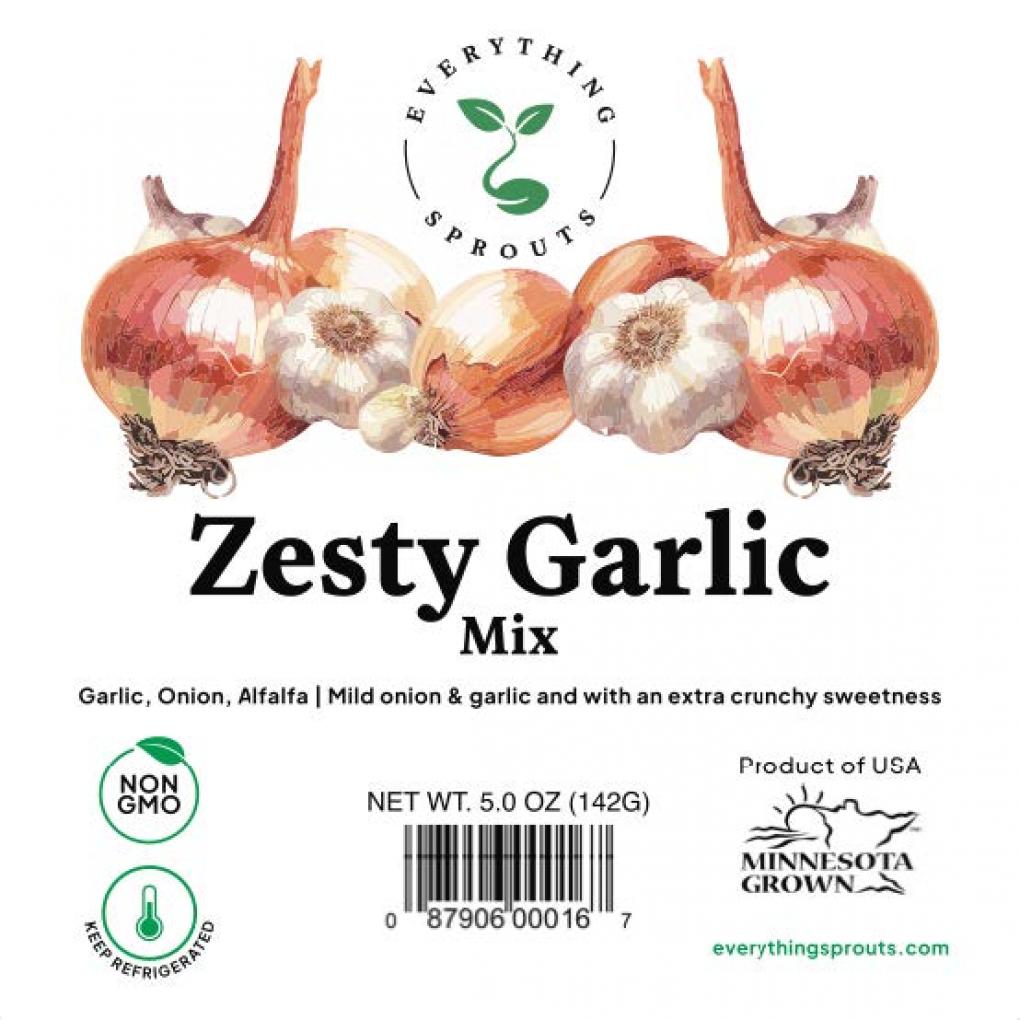
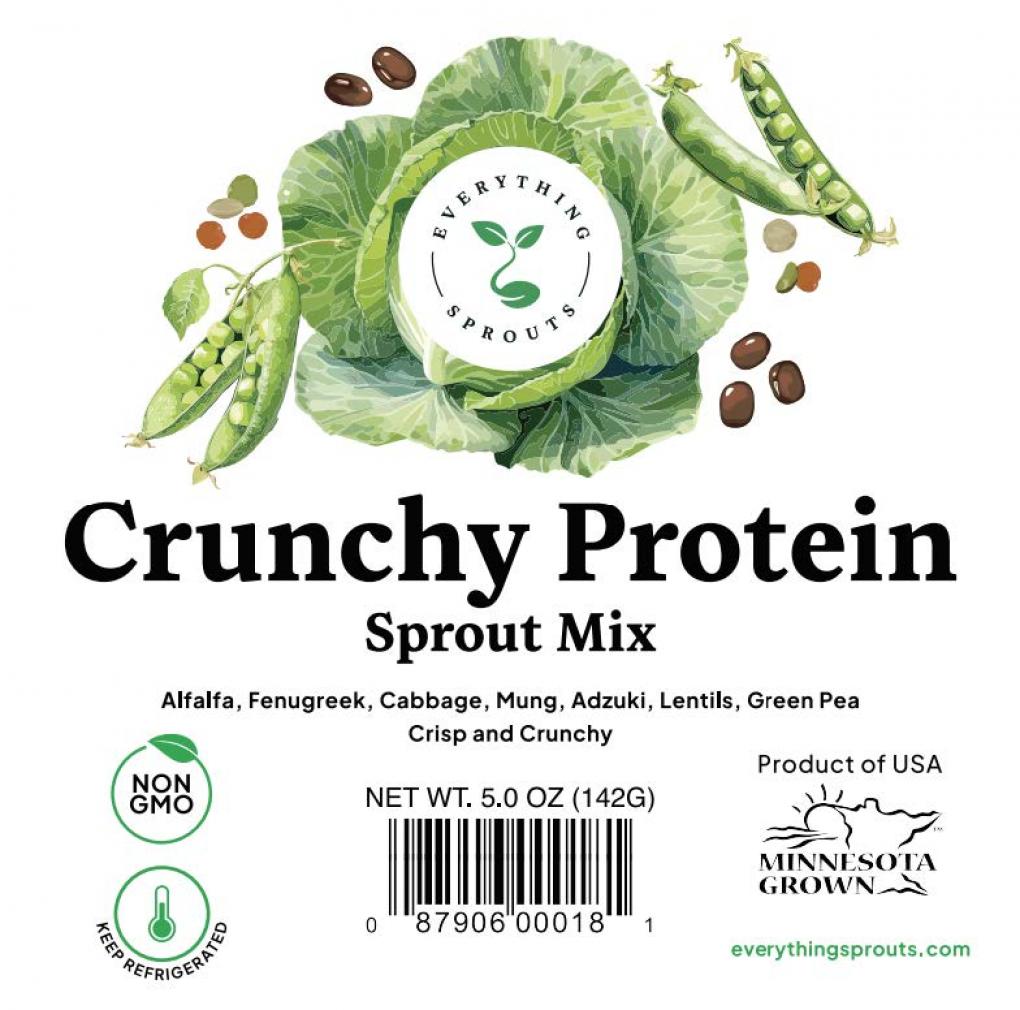
On August 22, FDA published a detailed recall announcement that identifies both Everything Sprouts and Calco alfalfa sprouts and provides specific lot numbers and barcodes. The recalled Everything Sprouts and Calco alfalfa sprouts bear barcodes 860014523113, 860014523120 and 850079470149. FDA also identifies Everything Sprouts Crunchy Protein Sprout Mix and Zesty Garlic Mix made with alfalfa sprouts from affected lots.
The recall then grew again. On August 29, 2026, FDA published a company announcement dated August 28 in which Everything Sprouts, LLC expanded the recall to a fourth product: Robust Radish Sprout Mix in 5 ounce cups, barcode 087906000075, lots 223, 226, 230 and 233. Lot 233 appears in no earlier notice, so anyone who checked a package against the original recall list was checking against a list that was short by one product and one lot number.
| Recalled Product | Package | Recalled Lot Numbers |
| Everything Sprouts and Calco Alfalfa Sprouts | 5 oz. plastic containers | 222, 223, 225, 226, 230 |
| Everything Sprouts Crunchy Protein Sprout Mix | 5 oz. cups | 222, 223, 226, 230 |
| Everything Sprouts Zesty Garlic Mix | Cups | 222, 223, 225, 226, 230 |
| Everything Sprouts Robust Radish Sprout Mix | 5 oz. cups | 223, 226, 230, 233 |
The first three recalled products were distributed from May 27 through August 21, 2026 to wholesale distributors and grocery stores in Minnesota and Wisconsin. The Robust Radish Sprout Mix added on August 29 was distributed from August 13 through August 26, 2026 to the same kind of customers in the same two states, so the recall now reaches product sold up to August 26.
FDA traces outbreak to recalled alfalfa seed lot SAL2-24JB
CDC says epidemiologic and traceback evidence point to recalled alfalfa seed lot SAL2-24JB as a source of illnesses in the E. coli and Salmonella outbreak. FDA previously found that Everything Sprouts and at least one additional sprout grower received and used seed from the same lot.
FDA enforcement records identify International Sprout Holdings, Inc. of Cookeville, Tennessee as the recalling firm for 43,799 pounds of alfalfa seed packaged in 50-pound bags under the International Specialty Supply name, lot SAL2-24JB. According to FDA’s outbreak investigation, the recalled seed was sold directly to sprout growers and wholesale distributors and may also have been sold at retail.
The seed lot was distributed to California, Florida, Hawaii, Illinois, Massachusetts, Minnesota, Missouri, Montana, New York, Ohio, Oregon, Pennsylvania, South Carolina, Tennessee, Texas and Utah, as well as Puerto Rico. It was also shipped to Canada, Mexico, Tahiti and Venezuela.
The seed recall has also reached retail sprouting seed. On September 23, Berlin Seeds recalled 950 pounds of alfalfa sprouting seed after its supplier notified the company that the seed was associated with the outbreak investigation. Berlin Seeds sold the recalled seed at its Ohio store and through its website to customers in 44 states. The 5-pound and 50-pound packages carry lot code SAL2-24JB. Smaller recalled packages do not carry a lot code.
The seed distribution is different from the distribution of finished Everything Sprouts products. Recalled Everything Sprouts and Calco sprouts were distributed primarily to grocery stores, restaurants and distributors in Minnesota and Wisconsin. FDA says the best-by dates for the recalled finished sprouts have passed and those products should no longer be available for sale.
FDA is continuing to investigate contamination of the implicated alfalfa seed and other factors that may have contributed to the outbreak.
Minnesota and Wisconsin were among the first states to report illnesses
Before federal officials announced the full 15-state outbreak, on August 20, 2026, the Minnesota Department of Health reported 23 Minnesota illnesses occurring between July 8 and August 8, including two hospitalizations. Wisconsin investigators had identified another 18 cases.
FDA identifies the Salmonella strain involved in the outbreak as Salmonella Agona and the Shiga toxin-producing E. coli serotypes as O26, O103 and O168. Some people in the outbreak were infected with both E. coli and Salmonella.
Everything Sprouts E. coli and Salmonella Outbreak At a Glance
| Outbreak Detail | Current information |
| Total illnesses | 76 |
| Hospitalizations | 6 |
| Deaths | No deaths reported |
| States with cases | 16: Florida, Indiana, Iowa, Kansas, Michigan, Minnesota, New Hampshire, New York, North Carolina, North Dakota, Oregon, Pennsylvania, South Carolina, South Dakota, Washington and Wisconsin |
| E. coli strains | E. coli strains O26:H11, O103:H25 and O168:H8 |
| Salmonella strain | Salmonella Agona |
| Pathogen breakdown | 64 people infected with STEC E. coli, 9 with Salmonella Agona, and 3 with both E. coli and Salmonella |
| Illness onset dates | May 31 through September 7, 2026 |
| Food linked to outbreak | Alfalfa sprouts |
| Recalled seed lot | SAL2-24JB |
| Seed supplier / recalling firm | International Sprout Holdings, Inc. of Cookeville, Tennessee; alfalfa seed sold under the International Specialty Supply name |
| Everything Sprouts products | Everything Sprouts and Calco Alfalfa Sprouts, Crunchy Protein Sprout Mix, Zesty Garlic Mix and Robust Radish Sprout Mix |
| Investigation status | Ongoing. CDC says epidemiologic and traceback data point to recalled alfalfa seed lot SAL2-24JB. FDA continues to investigate contamination of the seed and other contributing factors. |
| Current public health advice | Do not eat, sell or serve recalled sprouts. Do not use or sell recalled alfalfa sprouting seed. |
How Did Investigators Link the Outbreak to Alfalfa Sprouts?
CDC says epidemiologic, laboratory and traceback evidence link illnesses in this outbreak to alfalfa sprouts and recalled alfalfa seed lot SAL2-24JB.
Of 50 people interviewed about what they ate before becoming sick, 40, or 80%, reported eating sprouts. Thirty-five specifically reported eating alfalfa sprouts. By comparison, only 8.7% of people surveyed through CDC’s FoodNet Population Survey reported eating any type of sprouts. CDC says this difference suggests that people in the outbreak became sick from eating alfalfa sprouts.
Investigators have also identified seven illness clusters in Minnesota and Wisconsin, with alfalfa sprouts the food most commonly reported by people in those clusters. Traceback from Minnesota and Wisconsin restaurants identified alfalfa sprouts distributed by Everything Sprouts as a source of illnesses, and FDA traced illnesses to a single lot of alfalfa seed from a common supplier.
Whole genome sequencing showed that bacteria from patients were closely related genetically, providing additional evidence that people in the outbreak became sick from the same source.
FDA warned Everything Sprouts in 2025 about serious food-safety violations
A potentially important part of the company’s regulatory history predates this outbreak. On March 28, 2025, the U.S. Food and Drug Administration issued an FDA warning letter to Everything Sprouts LLC after inspecting the company’s Minneapolis sprouting operation from October 30 through November 14, 2024.
FDA said the inspection revealed serious violations of the federal Produce Safety Rule. The warning letter addressed mung bean, soybean, and green sprout products. It did not identify the 2026 alfalfa sprouts involved in the current outbreak.
Among the conditions FDA described from the 2024 inspection were:
- A roof leak near packaging tables, with water observed dripping onto totes containing cooled, exposed mung bean sprouts as they moved through the area for packaging.
- Condensate dripping from equipment in areas where sprouts were grown or stored.
- A buildup of black organic matter on an irrigation-system hose that passed over exposed soy sprouts.
- Food-contact surfaces that FDA said were not cleaned and sanitized as required.
- Visibly soiled strip curtains that investigators observed contacting harvested mung bean sprouts as the sprouts moved between rooms.
Everything Sprouts submitted responses describing completed and planned corrective actions. FDA said in the warning letter that it could not evaluate the adequacy of several of those corrective actions based on the information provided and would evaluate them at a future inspection.
FDA also noted that one of those conditions was not new. Writing about the dripping condenser units, the agency said that during previous inspections of the sprout operation in 2023 and in 2018, when the operation was under different ownership but working in the same facility, its investigators had observed dripping condenser units as well.
The 2025 warning letter remains relevant regulatory history, but it does not establish what caused the 2026 outbreak. The warning letter concerned conditions observed in 2024 and discussed other sprout products. The current investigation has now traced illnesses to recalled alfalfa seed lot SAL2-24JB. FDA enforcement records identify International Sprout Holdings, Inc. as the recalling firm for the implicated seed lot, which was used by Everything Sprouts and other sprout growers. FDA is still investigating contamination of the implicated seed and other factors that may have contributed to the outbreak.
That is also why careful outbreak litigation requires more than simply finding an old inspection report. A serious food poisoning case may require laboratory evidence, epidemiological data, seed and production records, sanitation records, spent irrigation-water testing records, distribution documents, restaurant invoices, and expert analysis of how the contamination could have occurred.
Why are alfalfa sprouts a high-risk food for E. coli and Salmonella?
Sprouts are a special food-safety problem because the same environment that helps a seed become a sprout can also help bacteria multiply. FDA explains that sprouts are particularly vulnerable because they are grown in warm, moist, nutrient-rich conditions that are also favorable for pathogens.
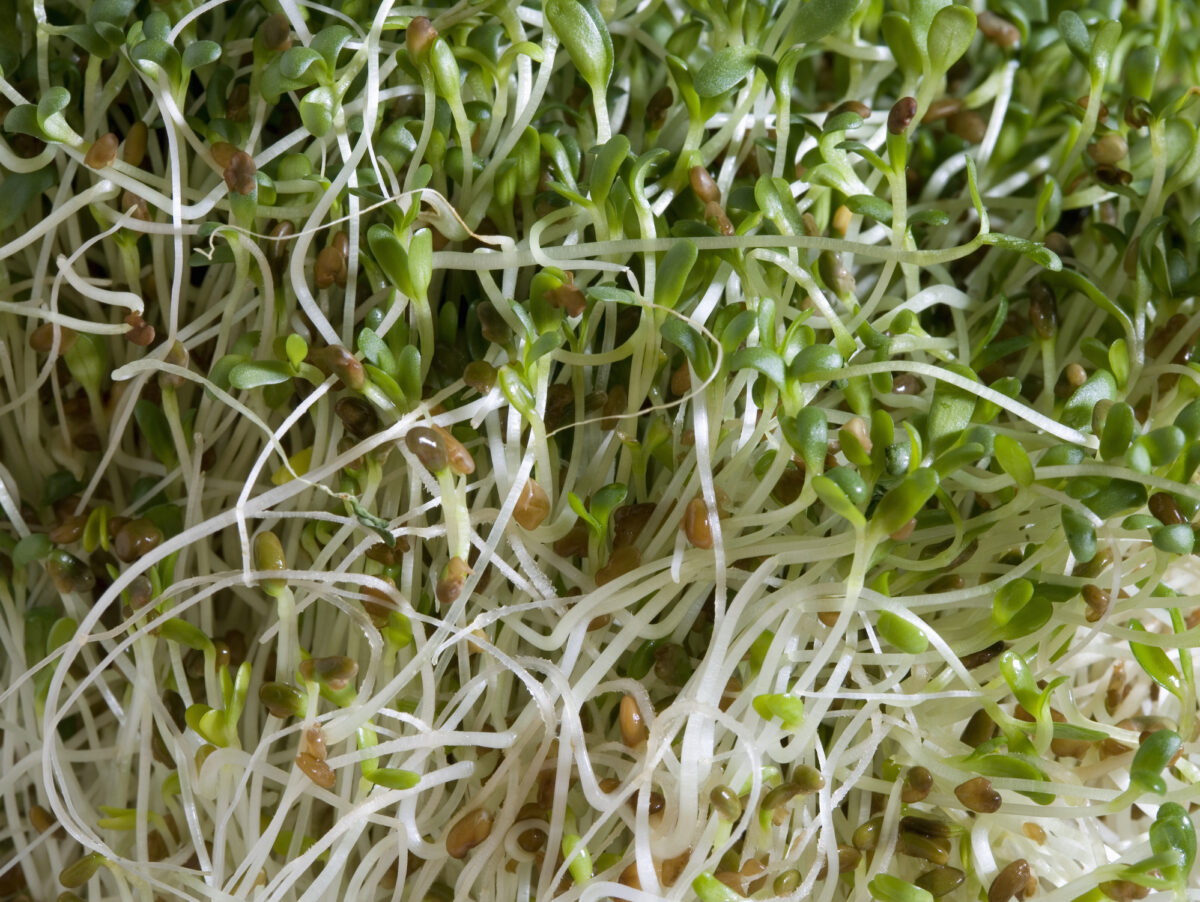
Contamination can begin with seed, water, equipment, people, or the production environment. If a small number of Salmonella or STEC bacteria are present on or in seed, the sprouting process can give them favorable conditions to increase to dangerous levels. That is one reason sprout operations are subject to special requirements under the federal Produce Safety Rule, including measures addressing seed treatment and testing of spent sprout irrigation water or in-process sprouts for specified pathogens.
Pritzker Hageman has been writing about this problem for years. Our 2022 review, E. coli, Salmonella and Listeria Food Poisoning from Sprouts is Common, discusses the long history of sprout-related outbreaks. Our food safety page also identifies raw sprouts as one of the foods that repeatedly appears in outbreak investigations.
For the products involved in this outbreak, consumers should follow the current public health advice and throw the sprouts away. Do not rely on rinsing an implicated product to make it safe.
A Separate Broccoli Sprouts Salmonella Outbreak Is Linked to Evergreen Fresh Sprouts
A second sprout outbreak is also under investigation in 2026, but it is separate from the Everything Sprouts and Calco alfalfa sprouts outbreak.
CDC and FDA have linked broccoli sprouts grown by Evergreen Fresh Sprouts, LLC of Idaho to an outbreak of Salmonella Bovismorbificans. As of CDC’s September 24, 2026 update, 32 people in six states have been sickened, including three people who were hospitalized. No deaths have been reported. Evergreen Fresh Sprouts recalled its broccoli sprouts on September 4, 2026.
The two outbreaks involve different growers, different products and different outbreak strains. The Everything Sprouts outbreak involves alfalfa sprouts, Salmonella Agona and multiple strains of Shiga toxin-producing E. coli, while the Evergreen Fresh Sprouts outbreak involves broccoli sprouts and Salmonella Bovismorbificans.
STEC E. coli symptoms to watch for
Shiga toxin-producing E. coli can cause severe illness. In this outbreak, Minnesota health officials say symptoms typically include:
- Stomach cramps
- Diarrhea, often bloody
- Low-grade fever or no fever
Symptoms typically begin two to five days after exposure, although Minnesota health officials say the range can be one to eight days. Most people recover in about five to seven days, but some STEC infections lead to hemolytic uremic syndrome, or HUS.
HUS is a potentially life-threatening complication in which the kidneys and other organs can be seriously injured. It is particularly concerning in young children, although people of any age can develop it. Our page on the long-term consequences of HUS and kidney failure explains why physicians continue to monitor some patients even after the acute infection has passed.
The CDC lists HUS warning signs that include urinating less often or not at all, unusual paleness, unexplained bruising or tiny red spots, blood in the urine, extreme tiredness or irritability, and decreased alertness. HUS is a medical emergency. Anyone showing these signs after a diarrheal illness should get medical care immediately.
Do not self-treat suspected STEC with antibiotics or anti-diarrheal medicine
Minnesota health officials say diarrhea associated with STEC generally should not be treated with antibiotics because antibiotic treatment can promote development of HUS. The CDC’s E. coli treatment guidance also warns against antibiotics for STEC infections and says anti-diarrheal medications can increase the chance of HUS in people with STEC.
If you think you may have an STEC infection, contact a healthcare provider rather than trying to treat the illness on your own.
Salmonella symptoms to watch for
Salmonella illness commonly causes:
- Diarrhea
- Abdominal pain or cramping
- Fever
Minnesota health officials say symptoms usually begin within 12 to 96 hours after exposure but can begin as late as two weeks after exposure. Most infections clear in five to seven days. Some people, however, develop more serious illness and need hospital care.
A stool test can be especially important when a person has symptoms consistent with an active outbreak. A laboratory diagnosis can guide medical care, may allow public health laboratories to identify and compare the infecting strain with outbreak data, and can become important evidence if the illness later results in a legal claim.
What should I do if I ate Everything Sprouts or Calco alfalfa sprouts and became sick?
1. Get medical care when your symptoms warrant it
Tell your healthcare provider that you may have eaten alfalfa sprouts associated with an active STEC and Salmonella outbreak. Ask whether stool testing is appropriate. Seek urgent care for severe dehydration, bloody diarrhea, severe abdominal pain, HUS warning signs, or other symptoms that concern you.
2. Follow the public health warning about the sprouts
Do not eat recalled Everything Sprouts or Calco alfalfa sprouts or sprout mixes. Check the product and lot number against the FDA recall, dispose of affected products, and clean and sanitize surfaces or containers they touched.
3. Write down where and when you ate sprouts
If the exposure may have occurred at a restaurant, record:
- Restaurant name and location
- Date and approximate time of the meal
- Menu item ordered
- Whether sprouts were visible or listed as an ingredient
- Names of other people who ate with you and whether they became ill
- Delivery-app, loyalty-account, credit-card, or emailed receipt information
This can help public health investigators and can also help establish product identification in a legal investigation.
4. Save records that already exist
Keep copies of medical records, stool-test results, discharge instructions, pharmacy receipts, missed-work documentation, and purchase or restaurant records. You do not need to assemble a perfect file before speaking with a lawyer. These are simply examples of information that can become useful later.
5. Provide public health investigators your information
If a state or local health department contacts you, provide accurate information about foods, restaurants, grocery purchases, travel, and illness dates. Public health interviews can identify exposure patterns that one patient could not see alone.
Can I sue if I got E. coli or Salmonella from Everything Sprouts or Calco alfalfa sprouts?
A viable food poisoning claim depends on evidence linking a person’s illness to the contaminated food and on the law that applies to the case. A laboratory-confirmed STEC or Salmonella infection combined with a documented exposure to the implicated sprouts can be particularly important, but every case is different.
A person does not necessarily need the original retail package or a paper receipt. In outbreaks involving restaurant food, lawyers and investigators may be able to use credit-card records, online orders, restaurant invoices, distributor records, public health interviews, traceback findings, and microbiological evidence to establish the chain of distribution.
Depending on what the investigation shows and the law that applies, potentially responsible parties could include a grower, processor, seed supplier, distributor, restaurant, or other seller. It would be premature to say which parties are legally responsible for this outbreak before the contamination source and distribution chain are fully investigated.
Pritzker Hageman’s food poisoning attorneys evaluate serious outbreak cases by looking at both the medical evidence and the food-distribution evidence. If you were hospitalized, developed HUS or kidney injury, had another serious complication, or lost a family member, early legal investigation can be especially important because records and witness memories are easier to preserve while an outbreak is active.
Pritzker Hageman has investigated Minnesota sprout outbreaks before
This is not the first Minnesota and Wisconsin outbreak involving alfalfa sprouts. In 2016, Pritzker Hageman investigated an E. coli O157 outbreak linked to alfalfa sprouts sold in Minnesota and Wisconsin. Our food safety team has also covered and litigated outbreaks involving many other contaminated foods and pathogens.
That prior experience matters because foodborne illness cases are not simply ordinary personal injury claims. They often turn on microbiology, epidemiology, whole genome sequencing, traceback data, food-distribution records, and expert testimony. Our firm has spent decades working with this evidence.
Our firm’s headquarters are in Minneapolis, and our Minnesota E. coli lawyers and foodborne illness practice represent clients in Minnesota and nationwide. Our E. coli team obtained a $7.55 million trial verdict for a child who suffered E. coli-associated HUS and kidney injury. Our Salmonella lawyers have also obtained multimillion-dollar results for people catastrophically injured by Salmonella infections. Past results do not guarantee the outcome of any future case, and the value of a claim depends on its facts.
Contact a Pritzker Hageman food poisoning lawyer
If you or a family member tested positive for STEC E. coli or Salmonella after eating alfalfa sprouts at any time from late May 2026 onward, particularly if the illness required hospitalization or caused HUS, kidney injury, or another serious complication, we can evaluate whether your illness may be connected to the Everything Sprouts and Calco outbreak. FDA’s illness onset range for this outbreak now begins May 31, 2026.
Contact Eric Hageman today and find out how you can get compensation and justice
1-888-377-8900 (Toll-Free) | [email protected]

Frequently asked questions about the Everything Sprouts outbreak
Everything Sprouts and Calco are the named brands in the finished-product recall, but the outbreak investigation is now broader than those brands. FDA and CDC have traced illnesses to recalled alfalfa seed lot SAL2-24JB, which was supplied to Everything Sprouts and at least one additional sprout grower. Everything Sprouts also recalled Crunchy Protein Sprout Mix, Zesty Garlic Mix and Robust Radish Sprout Mix because they contained recalled alfalfa sprouts or could have been cross-contaminated.
As of October 1, 2026, CDC reports 76 illnesses in 16 states. Six people have been hospitalized, and no deaths have been reported. Sixty-four people were infected with Shiga toxin-producing E. coli, nine with Salmonella Agona, and three with both E. coli and Salmonella. Illnesses began between May 31 and September 7, 2026.
As of October 1, illnesses have been reported in 16 states: Florida, Indiana, Iowa, Kansas, Michigan, Minnesota, New Hampshire, New York, North Carolina, North Dakota, Oregon, Pennsylvania, South Carolina, South Dakota, Washington and Wisconsin. CDC says the outbreak may not be limited to states with known illnesses and that the true number of sick people is likely higher than the reported count.
Yes, and it has been expanded twice. A recall covers alfalfa sprouts sold under both the Everything Sprouts and Calco brands. FDA published the recall announcement on August 22, 2026, identifying 5-ounce alfalfa sprouts in lots 222, 223, 225, 226 and 230; Everything Sprouts Crunchy Protein Sprout Mix in lots 222, 223, 226 and 230; and Everything Sprouts Zesty Garlic Mix in lots 222, 223, 225, 226 and 230. On August 29, 2026 FDA published a further company announcement adding Everything Sprouts Robust Radish Sprout Mix in 5 ounce cups, barcode 087906000075, lots 223, 226, 230 and 233. If you still have any of these products, do not eat them.
CDC says epidemiologic and traceback data point to recalled alfalfa seed lot SAL2-24JB. FDA enforcement records identify International Sprout Holdings, Inc. of Cookeville, Tennessee as the recalling firm for the implicated seed lot, sold under the International Specialty Supply name. Everything Sprouts and at least one additional sprout grower received and used seed from the same lot. Berlin Seeds separately recalled alfalfa sprouting seed associated with lot SAL2-24JB.
That can still be relevant. Health officials say the implicated sprouts were sold to restaurants as well as grocery stores. A restaurant invoice, distributor record, credit-card transaction, online order, or public health traceback may identify the supplier even when the customer never saw the package.
Minnesota health officials say symptoms typically begin two to five days after exposure, with a possible range of one to eight days.
Minnesota health officials say Salmonella symptoms usually begin 12 to 96 hours after exposure but can begin as late as two weeks after exposure.
Do not self-treat a suspected STEC infection with antibiotics. Minnesota health officials say diarrhea associated with STEC generally should not be treated with antibiotics because doing so can promote HUS. Contact a healthcare provider for individualized medical advice.
Hemolytic uremic syndrome is a serious complication most often associated with STEC infection. It can cause acute kidney failure and other severe problems. Reduced urination, unusual paleness, unexplained bruising or tiny red spots, blood in the urine, severe tiredness, irritability, or decreased alertness after a diarrheal illness are reasons to seek immediate medical attention.
A laboratory-confirmed infection is often powerful evidence and can make it much easier to connect an illness to an outbreak. Whether a claim is possible without a positive stool test depends on the facts, timing, exposure evidence, and applicable law. A food poisoning lawyer can evaluate the available evidence.
Not necessarily. Receipts are useful, but other records may identify an exposure, including credit-card statements, delivery-app histories, loyalty accounts, text messages, calendar entries, photographs, restaurant invoices, distributor records, and public health traceback evidence.
We have obtained 100+ separate verdicts and settlements greater than $1 million:
We obtained this settlement on behalf of a family whose children were sickened with E. coli.
We obtained a $12.15 million settlement on behalf of an 8-year old girl who was sickened in an E. coli outbreak.
We obtained this settlement on behalf of a 13-year old girl who was sickened with E. coli.
We won this verdict for a child with kidney damage from E. coli in contaminated food.
We obtained a settlement from a company that sold contaminated food to our clients, causing the death of unborn children.
We obtained this settlement on behalf of a 12-year old boy who was sickened in an E. coli outbreak.
See more settlements & verdicts.
The Pritzker Hageman law firm and our attorneys have been recognized in:
U.S. News & World Report

Pritzker Hageman has been recognized as one of the best law firms for personal injury litigation by U.S. News & World Report every year the award has been given since 2012.
Super Lawyers®, Thomson Reuters

Attorneys at Pritzker Hageman have been awarded the peer selected Super Lawyers distinction every year since 2004.
America’s Top 100 Attorneys®

Lifetime Achievement selection to America’s Top 100 Attorneys®.
Three Time Attorneys of the Year

Pritzker Hageman lawyers have been named Attorneys Of The Year by Minnesota Lawyer three times.