
The following information is provided by Pritzker Hageman, a national food safety law firm. You can contact our food sfatey legal team to talk to a lawyer about your case: 1-888-377-8900 (toll free).
Looking for the current restaurant investigation? Read our 2026 jalapeño Salmonella outbreak report for the latest case count, affected states, recall, Chipotle and QDOBA information, and patient guidance. If you tested positive after a restaurant meal, follow our medical and evidence-preservation checklist.
How Do I Know If I Have a Salmonella Lawsuit?
A viable claim generally requires evidence of both a Salmonella infection and a legally supportable connection to contaminated food, a restaurant, or another responsible source. The analysis is individual; a news report or shared restaurant visit alone does not prove a case.
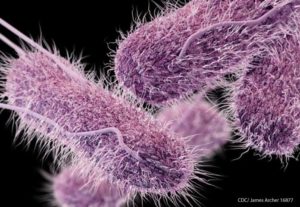
- Medical proof of infection. A stool culture is the diagnostic gold standard. Many different kinds of illnesses can cause diarrhea that is sometimes bloody, fever, or abdominal cramps. Determining that Salmonella bacteria is the cause of the illness depends on laboratory tests that identify it in the stools or urine of an infected person. These tests are sometimes not performed unless the laboratory is instructed specifically to look for the organism. A molecular test such as a PCR gastrointestinal panel may detect Salmonella, but a culture isolate can be important for serotyping, antimicrobial-susceptibility testing, and whole genome sequencing. The CDC clinical overview explains the role of culture and reflex culture.
- Evidence connecting the illness to the source. This is important because there are many different ways you can become infected. Thus, we have to prove that your infection (salmonellosis) came from a particular outbreak. To do that, the culture of Salmonella from your stool or urine sample needs to undergo additional testing to see if its genetic fingerprint matches the genetic fingerprint of the other people who are part of an outbreak. The meal date and location, incubation period, food history, receipt or app record, illness cluster, public-health interview, traceback, supplier records, and whole genome sequencing may work together. No single fact necessarily decides the claim.
- Evidence of loss. It is not hard to prove that there was harm, but it takes experience to know how much a case is worth. Our law firm hires medical and financial experts to help our attorneys determine an amount that will fully and adequately compensate you for your pain and suffering, medical expenses, lost income and other damages. These amounts should reflect expected future expenses, losses and pain. Medical records, bills, lost income, disability, pain, continuing complications, and other legally recoverable harm affect how a claim is evaluated. Read our Salmonella lawsuit guide.
Do I need to hire a lawyer?
The short answer is yes. As you can see, these cases are complicated. Only a few law firms in the United States have the experience and resources to successfully pursue these kinds of cases. You can click here now to contact our lawyers for a free consultation.
How Can Our Lawyers Help You?
Phone: 1-888-377-8900 | Text: 612-261-0856 | [email protected]
What Should I Do With Leftover Food That May Have Caused My Illness?
Do not eat it, serve it to anyone else, or handle it unnecessarily. Keep the food sealed, labeled with the purchase or meal date, and separated from other food. Preserve the original package, label, receipt, and photographs. Ask the health department or an experienced food-safety lawyer before discarding the food, moving it to another container, or sending it to a private laboratory. Testing and chain-of-custody decisions can affect both a public-health investigation and a legal claim.

How Is Whole Genome Sequencing Used in a Salmonella Outbreak?
Whole genome sequencing compares the genetic material of Salmonella isolates. Closely related isolates can help public-health investigators identify people who may be part of the same outbreak and connect patient samples with food or environmental samples. A serotype such as Salmonella Javiana is broader than an outbreak strain; people infected with the same serotype do not automatically belong to the same outbreak.
Sequencing is one part of the evidence. Investigators also use illness timing, interviews, restaurant or purchase clusters, food histories, traceback, supplier records, and environmental or product testing. A close genetic relationship supports a common source but does not, by itself, identify which food or company caused the illnesses.
A person may still have a claim even if no leftover food is available or no product sample tests positive. The strength of the case depends on the combined medical, epidemiologic, traceback, and legal evidence.