
The multistate infant botulism outbreak linked to Nara Organics Whole Milk Organic Powdered Infant Formula is over. The Centers for Disease Control and Prevention closed the investigation and declared the outbreak over on August 27, 2026, and reported that data indicate a common source of contamination behind this outbreak and the separate 2025 outbreak linked to ByHeart Whole Nutrition Infant Formula.
Nara Organics recalled all of its infant formula on June 13, 2026. The recall covers every lot of Nara Organics Whole Milk Organic Infant Formula currently on the market, not only the lots known to have been fed to sick infants. The recalled formula was sold nationwide at Target stores, Target.com, and Nara.com from July 2025 through June 2026.
PARENT AND CAREGIVER WARNING
Do not feed any recalled Nara Organics infant formula to a baby. If an infant who consumed the formula has poor feeding, loss of head control, difficulty swallowing, decreased facial expression, a weak cry, unusual floppiness, or trouble breathing, seek emergency medical care immediately. Botulism can progress to respiratory arrest.
Call 911 for breathing difficulty, bluish color, severe weakness, choking, or an infant who is hard to wake. Do not wait for a laboratory test before seeking care.
Nara Organics Botulism Outbreak: Key Facts
- Outbreak status: Over as of August 27, 2026.
- Confirmed cases: 4 infants.
- Hospitalizations: 4; all known patients were hospitalized and treated with BabyBIG.
- Deaths: 0 reported.
- States: California (2), Pennsylvania (1), and Washington (1). Washington health officials identified the Washington patient as a Thurston County infant.
- Age range: 2 to 5 months old when symptoms began.
- Illness onset: April through May 2026.
- Product: Nara Organics Whole Milk Organic Powdered Infant Formula.
- Recall scope: All lots currently on the market, in both recalled package sizes.
- Where sold: Target stores nationwide, Target.com, and Nara.com between July 2025 and June 2026.
The current case count and investigation details come from the CDC outbreak notice and the FDA outbreak investigation. Because infant botulism symptoms can take several weeks to appear, additional cases or updated test results may be reported.
Do You Need a Nara Organics Botulism Lawyer?
If your baby developed infant botulism after consuming Nara Organics formula, the national food safety lawyers at Pritzker Hageman are investigating claims involving the recalled product. Our botulism lawyers understand the medical and scientific evidence required to trace a severe illness through a formula supply chain that may involve a brand owner, overseas manufacturing and packaging facilities, ingredient suppliers, processors, distributors, and retailers.
A family should not have to investigate a complex international formula supply chain while caring for a critically ill infant. We can preserve evidence, obtain public-health and corporate records, work with qualified experts, identify potentially responsible companies, and pursue compensation for medical expenses, future care, lost income, pain and suffering, and other losses allowed by law.
Contact Our Infant Botulism Legal Team
Free, confidential case review Contact Pritzker Hageman online or call us 1-888-377-8900 (Text: 612-261-0856). We represent clients nationwide, make hospital and home visits when appropriate, and charge no fees ever unless we win compensation for you.
Which Nara Organics Formula Products Were Recalled?
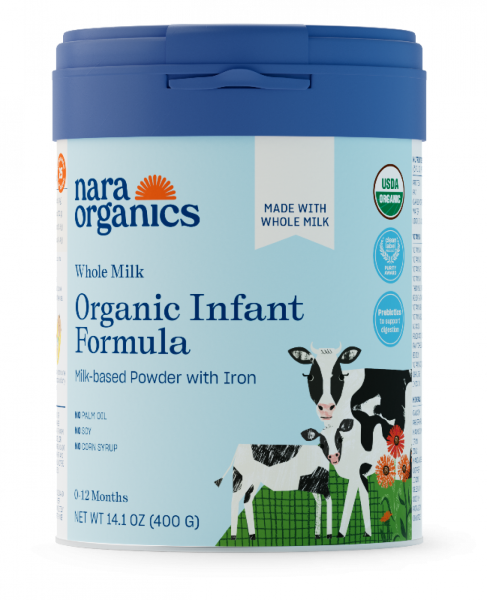
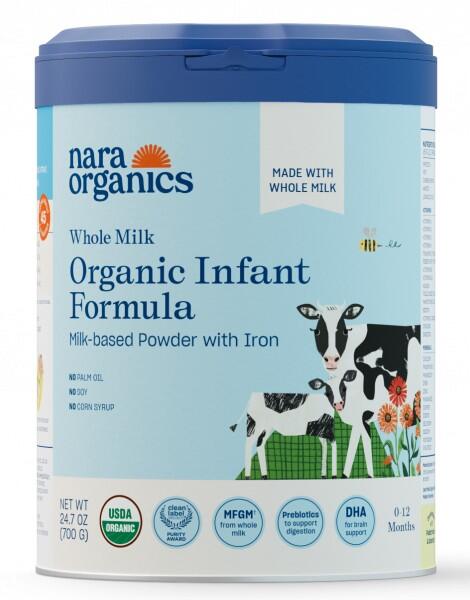
The FDA recall announcement covers all lots of Nara Organics Whole Milk Organic Powdered Infant Formula currently on the market. The products were distributed only in the United States.
| Product | Package Size | UPC |
| Nara Organics Whole Milk Infant Formula | 700 g | 860013251901 |
| Nara Organics Whole Milk Infant Formula | 400 g | 860013251918 |
Recalled Nara Organics Lot Codes
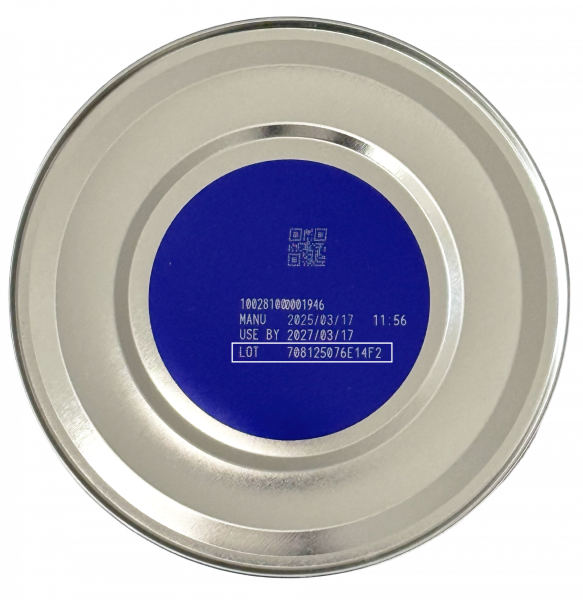
All lots currently on the market are recalled. The FDA announcement listed the following lot codes, which are printed on the bottom of the can:
| Lot Code | Lot Code |
| 408125075E14F2 | 708125076E14F2 |
| 708125083E14F2 | 408125139E14F2 |
| 708125141E14F2 | 708125145E14F2 |
| 708125174E14F2 | 709125273E14F2 |
| 709125280E14F2 | 709125288E14F2 |
| 409125307E14F2 | 70926019ENNB |
| 70926029ENNB | 70926035ENNB |
| 70926039ENNB | 70926042ENNB |
Three of the lot codes initially reported as having been consumed by sick infants were 709125280E14F2, 709125288E14F2, and 708125174E14F2. However, consumers should not use any Nara Organics infant formula, even if a can has a different code or the code is difficult to read.
What Should Parents Do With Recalled Nara Formula?
Follow the outbreak-specific instructions from FDA and CDC. The safest immediate steps are:
- Stop using the formula immediately. Do not make another bottle from the recalled product.
- Get medical help for symptoms. Tell the clinician that the infant consumed recalled Nara Organics powdered formula and provide the approximate dates of use.
- Photograph the can. Take clear pictures of the front, back, bottom, lot code, use-by date, UPC, and any visible damage or unusual condition.
- Save purchase records. Keep Target receipts, Nara.com or Target.com order confirmations, subscription records, shipping notices, credit-card statements, and emails.
- Handle an opened can carefully. CDC recommends writing “DO NOT USE” on it and storing it securely away from other infant-feeding items for at least one month, because symptoms can take weeks to appear and health officials may want to test the product if the baby becomes ill.
- Keep unopened cans isolated. Do not feed them to a baby. Follow the current FDA, CDC, retailer, and company instructions for return or disposal, but preserve photographs and identifying information first.
- Clean feeding equipment and surfaces. Wash bottles, nipples, scoops, preparation surfaces, and other items that may have touched the powder with hot, soapy water or in a dishwasher, as appropriate for the item.
- Report an illness or product problem. After obtaining medical care, families can use the FDA reporting information and should cooperate with state or local health officials.
| Do not discard crucial evidence after an illness If your baby is sick or has been diagnosed with infant botulism, contact the health department and an experienced attorney before returning, destroying, or transferring the product to a company representative. Public-health officials may need the formula for testing, and the container, lot code, purchase record, and chain of custody may be important evidence. This outbreak-specific advice differs from general botulism product-disposal guidance because CDC currently recommends retaining an opened Nara can for a period of time in case testing becomes necessary. |
Nara Organics Outbreak Timeline
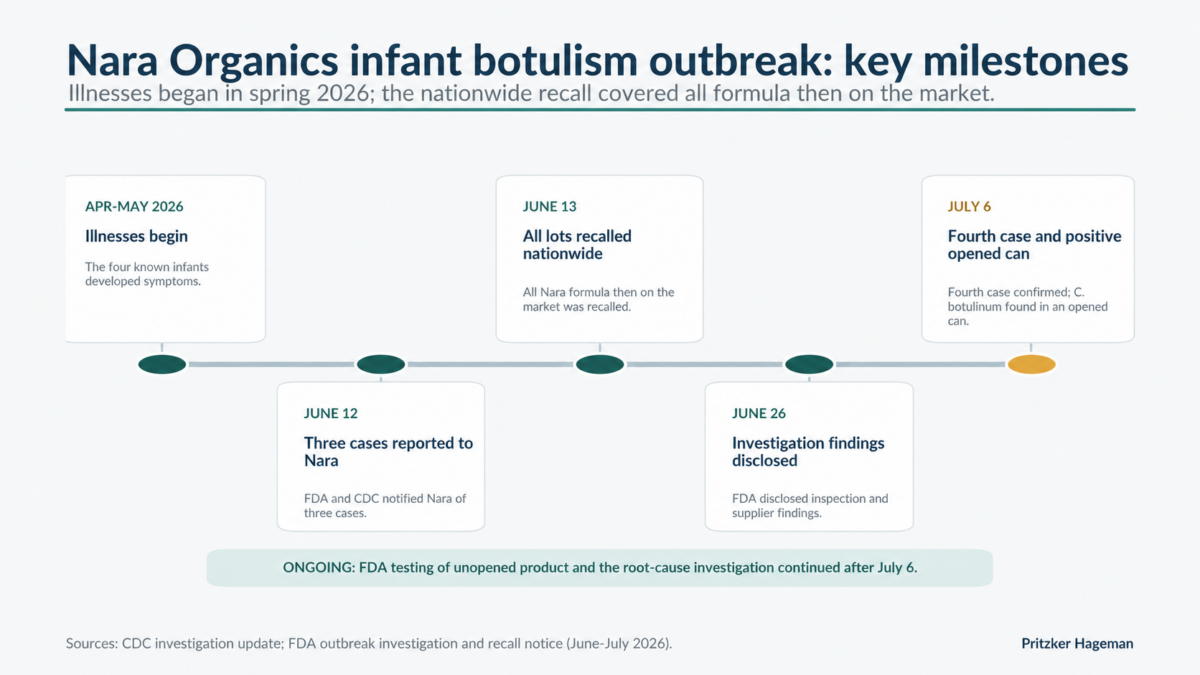
July 6, 2026: Fourth Confirmed Case Added
CDC added a fourth laboratory-confirmed infant botulism case. The four infants were reported from California (2), Pennsylvania (1), and Washington (1). All were male, were between 2 and 5 months old at illness onset, were hospitalized, and received BabyBIG. CDC also reported that laboratory testing had confirmed C. botulinum bacteria in an opened can of Nara Organics formula that had been fed to one of the sick infants.
June 26, 2026: FDA Discloses Supply-Chain and Inspection Findings
FDA reported that it had inspected the two European firms involved in manufacturing Nara Organics formula before learning of the illnesses and had issued observations citing deficiencies to both facilities. The facilities submitted corrective-action responses that were under review.
FDA also said the Nara lots consumed by outbreak patients were made using milk supplied by Organic West Milk and spray-dried by Dairy Farmers of America. Those were the same milk and milk-powder suppliers associated with the 2025 ByHeart outbreak. FDA cautioned that the available information was not sufficient to determine whether those ingredients were contaminated or caused the Nara illnesses.
June 13, 2026: Nationwide Recall Announced
After FDA and CDC informed Nara Organics of three infant botulism cases among infants who had consumed the formula, the company recalled all lots of Nara Organics powdered infant formula currently on the market. The FDA says it recommended a recall because of the severity of infant botulism and the epidemiologic signal.
April-May 2026: Illnesses Begin
The four known infants developed symptoms during April and May 2026. Infant botulism is often recognized only after feeding difficulty, constipation, weakness, or loss of head control progresses, which can delay identification of a common exposure.
Where Have Nara Formula Botulism Cases Been Reported?
California
CDC reports two confirmed California cases. The California Department of Public Health and its Infant Botulism Treatment and Prevention Program have played a central role in case consultation, testing, and coordination. California officials detected C. botulinum in an opened Nara Organics can from one outbreak household.
Pennsylvania
CDC reports one confirmed Pennsylvania case. No more specific public location was identified in the federal outbreak update.
Washington
CDC reports one confirmed Washington case. The Washington State Department of Health identified the patient as an infant from Thurston County who was hospitalized and treated for infant botulism.
Because Nara formula was sold nationally at Target and online, a family does not need to live in one of the three currently listed states to have purchased recalled product or to develop a reportable illness.
What Investigators Know – and What They Do Not Yet Know
Established Public-Health Findings
- All four confirmed patients consumed Nara Organics Whole Milk Organic Powdered Infant Formula before becoming ill.
- All four required hospitalization and BabyBIG treatment.
- All Nara Organics infant formula currently on the market was recalled nationwide.
- C. botulinum was detected in an opened can collected from the home of one affected infant.
- FDA is testing unopened product from the same lot and additional testing is underway.
- FDA had cited deficiencies after inspections at two European firms involved in making the formula, and corrective responses were under review.
- The implicated Nara lots used milk and milk powder from the same suppliers involved in the 2025 ByHeart outbreak.
Questions Still Under Investigation
- Whether unopened Nara formula contains C. botulinum spores.
- Where in the supply chain any contamination occurred.
- Whether milk, milk powder, another ingredient, the manufacturing environment, packaging, distribution, or post-opening handling contributed.
- Whether additional products or brands used ingredients from a potentially affected source.
- Whether additional infant botulism cases are connected to Nara formula.
An opened can that tests positive is important evidence, but investigators must evaluate the full chain of evidence, including clinical laboratory results, epidemiology, unopened-product testing, ingredient records, environmental testing, manufacturing records, and genetic comparisons. The CDC investigation page and FDA page should be treated as the authoritative sources for new findings.
Connection to the 2025 ByHeart Infant Formula Botulism Outbreak
The Nara investigation began only months after a separate, much larger outbreak linked to ByHeart Whole Nutrition powdered infant formula. CDC’s final outbreak summary counted 48 illnesses in 17 states: 28 confirmed and 20 probable cases. Every reported patient was hospitalized, and no deaths were reported.
FDA’s post-outbreak response work found C. botulinum in a powdered milk ingredient used by ByHeart. Whole-genome sequencing showed that two samples from one lot of organic whole milk powder matched a clinical sample and a positive infant-formula sample. FDA said its root-cause investigation remained focused on ingredients and the supply chain.
The overlap in suppliers is significant enough to investigate, but it does not by itself prove that the same ingredient or supplier caused the Nara outbreak.
When FDA described the supplier overlap, the agency cautioned that the available information was not sufficient to determine whether those ingredients were contaminated or caused the Nara illnesses. On August 27, 2026, in the summary closing this investigation, the CDC went further and reported that data indicate a common source of contamination for this outbreak and the 2025 ByHeart outbreak.
Families can read our ByHeart infant formula botulism outbreak coverage and the CDC’s final ByHeart outbreak summary for background.
What Is Infant Botulism?
Infant botulism is a rare but potentially fatal paralytic illness. It occurs when a baby swallows spores from Clostridium botulinum or, less commonly, another toxin-producing Clostridium species. In an infant’s still-developing intestinal tract, the spores can germinate, grow, and release botulinum neurotoxin.
The toxin interrupts communication between nerves and muscles. Weakness often begins with cranial-nerve functions such as sucking, swallowing, facial expression, eyelid movement, and crying. It can then progress downward through the neck, trunk, arms, legs, and muscles needed for breathing.
Infant botulism is different from classic foodborne botulism in older children and adults. In foodborne botulism, a person typically consumes toxin that has already formed in food. In infant botulism, the infant generally consumes spores, and toxin is produced inside the intestine.
How Can Botulism Spores Get Into Powdered Baby Formula?
Powdered infant formula is not sterile. FDA safe-handling guidance explains that environmental germs may enter formula or feeding equipment, while FDA’s botulism response explains that spores can be present in soil, sediment, and dust and can enter manufacturing or home environments on hands, footwear, equipment, ingredients, packaging, or contaminated surfaces.
Spore-forming bacteria present a special challenge. FDA says C. botulinum spores are highly resilient, can survive typical pasteurization, and may persist under harsh environmental conditions. Testing for spores is also more specialized and slower than routine testing for non-spore-forming pathogens such as Salmonella or Cronobacter.
Potential contamination points can include:
- Raw milk or another agricultural ingredient.
- Dry milk powder or another powdered ingredient supplied to the formula maker.
- The manufacturing, blending, transfer, or drying environment.
- Bulk transport, packaging, or storage equipment.
- The consumer’s home after a container is opened, including a contaminated scoop, countertop, sink area, bottle, or formula dispenser.
The source cannot be determined simply by assuming that contamination happened at one stage. A scientifically sound investigation follows ingredients and product through the entire supply chain and compares clinical, food, and environmental samples.
Does Mixing Formula With Hot or Boiling Water Make Recalled Nara Formula Safe?
No. Parents should not try to make recalled Nara Organics formula safe by heating it, boiling it, baking it, or changing the mixing method. The product should not be used.
Botulism spores are unusually heat resistant, and home preparation is not a validated kill step for recalled formula. Using water that is too hot can also create burn risks and may affect some nutrients. For non-recalled formula, caregivers should follow the product label and the baby’s clinician, use water from a safe source, measure water before adding powder, and use the exact powder-to-water ratio.
Families caring for a very young, premature, or immunocompromised infant should ask a pediatrician whether a commercially sterile liquid ready-to-feed formula is appropriate. FDA states that ready-to-feed liquid formula and liquid concentrate are manufactured to be sterile and are safer options than powder for infants at higher risk of serious infection.
Infant Botulism Symptoms Parents Should Know
Infant botulism may begin subtly and can be mistaken for constipation, reflux, dehydration, a viral illness, poor feeding, or normal sleepiness. Symptoms can include:
- Constipation, sometimes the earliest sign
- Poor feeding or a sudden drop in intake
- A weak suck, difficulty latching, or milk leaking from the mouth
- Choking, gagging, coughing, or difficulty swallowing
- A weak, altered, or unusually quiet cry
- Drooping eyelids (ptosis)
- Sluggish pupils or reduced eye movement
- Flattened or decreased facial expression
- Loss of head control
- Low muscle tone or a “floppy” appearance
- Generalized weakness or reduced movement
- Lethargy or unusual difficulty waking
- Shallow breathing, pauses in breathing, respiratory distress, or respiratory arrest
A baby does not need to have every symptom. Because early BabyBIG treatment improves recovery, clinicians are advised to act on a compatible clinical presentation rather than waiting for confirmatory testing.
How Long After Drinking Nara Formula Can Symptoms Appear?
FDA and CDC warn that symptoms can take as long as several weeks to develop after formula exposure. CDC recommends watching an infant for symptoms for one month after the baby last consumed Nara Organics formula.
The timing is not identical for every infant because spores must reach the intestine, germinate, colonize, and produce enough toxin to cause recognizable weakness. Parents should tell medical providers about recalled-formula exposure even if the last bottle was days or weeks earlier.
How Is Infant Botulism Diagnosed?
The initial diagnosis is clinical. A physician evaluates the pattern of constipation, feeding difficulty, cranial-nerve weakness, loss of head control, hypotonia, and descending paralysis. CDC clinical guidance instructs clinicians not to delay treatment while waiting for laboratory confirmation.
Laboratory confirmation generally involves testing stool or an enema specimen for botulinum toxin and toxin-producing bacteria. Product and environmental testing may be performed separately as part of an outbreak investigation. Infant botulism is a nationally notifiable condition, so suspected cases should be reported promptly to public-health authorities.
Clinicians in the United States who suspect infant botulism can call the Infant Botulism Treatment and Prevention Program at 510-231-7600 for free, 24-hour case consultation and access to BabyBIG.
How Is Infant Botulism Treated?
BabyBIG
BabyBIG, or Botulism Immune Globulin Intravenous (Human), is the FDA-approved treatment for infant botulism caused by toxin types A and B. The Infant Botulism Treatment and Prevention Program explains that it contains antibodies that neutralize toxin still circulating in the bloodstream before the toxin binds to additional nerve endings. It cannot instantly reverse paralysis that has already occurred, so early treatment matters.
The California Infant Botulism Treatment and Prevention Program reports that BabyBIG has reduced the average hospital stay by about 3.6 weeks compared with the placebo group in the pivotal trial. The program reports an average hospital stay of about 2.3 weeks for BabyBIG-treated infants, compared with about 5.7 weeks for infants who did not receive it.
Respiratory, Feeding, and Supportive Care
Many infants need intensive monitoring because weakness can impair breathing, swallowing, and airway protection. Treatment may include respiratory support or mechanical ventilation, tube feeding, intravenous fluids, suctioning, physical or occupational therapy, and careful prevention of aspiration and hospital-acquired complications.
Antibiotics do not neutralize botulinum toxin and are not routine treatment for intestinal colonization in infant botulism. Clinicians manage any separate bacterial infection based on the individual medical circumstances.
Will a Baby Recover From Infant Botulism?
Most infants recover with prompt diagnosis, BabyBIG, and high-quality supportive care, but recovery can take weeks or months because affected nerve endings must repair and reconnect with muscles. Feeding endurance and head control may return gradually. Some infants need rehabilitation and follow-up for swallowing, nutrition, strength, and developmental progress.
A favorable survival outlook does not mean the illness is minor. Hospitalization, intensive care, ventilation, tube feeding, repeated procedures, separation from family, and fear of respiratory failure can be traumatic and expensive. Medical and developmental follow-up should be based on the treating team’s recommendations.
Botulism in Baby Formula: Why the Nara and ByHeart Outbreaks Matter
Before the recent formula outbreaks, infant botulism was usually viewed as a sporadic environmental disease rather than a disease caused by a widely distributed commercial formula. The 2025 ByHeart investigation and the ongoing 2026 Nara investigation show why ingredient sourcing, supplier disclosure, spore controls, environmental monitoring, validated testing, and rapid traceback matter in powdered formula production.
FDA says the 2025 investigation identified a whole-milk-powder lot whose genetic profile matched both a patient sample and a positive formula sample. In response, FDA began surveillance sampling of powdered milk, additional supply-chain work, and efforts to improve risk assessment and control measures for spore-forming organisms in powdered infant formula.
For parents, the practical lesson is not that all powdered formula is unsafe. It is that powder is not sterile, infants are uniquely vulnerable, recalls should be taken seriously, and unexplained feeding weakness or floppiness after formula exposure requires urgent evaluation.
Can Infant Botulism Be Prevented?
Most sporadic infant botulism cannot be completely prevented because C. botulinum spores are naturally present in soil and dust. However, families can reduce avoidable risks:
- Never give honey to a child younger than 12 months. Do not add honey to formula, water, food, or a pacifier. Honey is the only food definitively linked to sporadic infant botulism through both laboratory and epidemiologic evidence. Our prior coverage explains the risk from honey-filled pacifiers.
- Do not use recalled formula. A different preparation method does not cancel a recall.
- Understand that powdered formula is not sterile. Ask a pediatrician about ready-to-feed liquid formula for a high-risk infant.
- Wash hands and clean preparation surfaces. Keep the scoop clean and dry, keep water out of the powder container, and avoid placing feeding equipment in or near a contaminated sink.
- Use safe water and exact measurements. Measure water first and then add the amount of powder stated on the label. Too much or too little water can harm an infant.
- Prepare and store formula safely. Follow current CDC preparation and storage guidance and discard formula left in a bottle after a feeding.
- Watch for early symptoms. Prompt recognition and BabyBIG treatment can shorten illness and hospitalization.
Can Families Sue Over Nara Organics Infant Formula Botulism?
A parent may be able to bring a product-liability or negligence claim on behalf of a child if evidence shows that contaminated formula caused the infant’s botulism. The current recall and outbreak investigation are important, but each family’s claim still requires a careful analysis of exposure, diagnosis, product identification, laboratory findings, medical harm, and applicable state law.
Potentially responsible parties may include one or more companies in the chain that designed, manufactured, blended, packaged, tested, imported, distributed, marketed, or sold the formula or a contaminated ingredient. Depending on the evidence, that could include the brand owner, contract manufacturers or packers, milk or milk-powder suppliers, other ingredient suppliers, distributors, and retailers such as Target.
Our food poisoning litigation team investigates what each company knew, what testing and sanitation controls were used, whether supplier information was complete, how complaints were handled, and whether the recall should have happened sooner.
What Compensation May Be Available?
Compensation depends on the facts and governing law, but a claim may seek recovery for:
- Past hospital, physician, ambulance, medication, rehabilitation, and therapy expenses
- Future medical monitoring, treatment, therapy, equipment, and caregiving needs
- Pain, suffering, fear, and loss of normal life experienced by the child
- Permanent impairment or developmental injury, if present
- Parents’ lost income and other legally recoverable family losses
- Out-of-pocket travel, lodging, childcare, and related expenses
- Wrongful-death damages if an infant dies from the illness
The value of a case cannot be determined from an online formula. It requires medical records, expert review, state-specific law, and an assessment of both immediate and future consequences.
Evidence Families Should Preserve
Scientific evidence is central to a formula botulism case. Pritzker Hageman’s article on how a food lawyer proves a contamination claim explains why product identification, clinical testing, traceback, and laboratory comparisons matter. Families should preserve:
- The formula can, lid, scoop, remaining powder, shipping box, and any individual packaging
- Photographs of the lot code, use-by date, UPC, label, powder, and container condition
- Target or Nara purchase receipts, online-order histories, subscription records, and payment statements
- A written timeline of formula use, symptoms, calls to clinicians, emergency visits, and hospitalization
- Bottles, formula dispensers, mixing machines, or other equipment if public-health officials request them
- Medical records, discharge instructions, laboratory reports, and BabyBIG documentation
- Communications with Nara Organics, Target, FDA, CDC, health departments, insurers, and other companies
- Names and contact information for caregivers or witnesses who prepared or fed the formula
- Photos and videos showing changes in feeding, cry, facial movement, head control, muscle tone, or recovery
Do not alter the product or repeatedly open the container. Store it securely and follow instructions from the health department or legal counsel. Maintaining a clear chain of custody can be important if testing is performed.
Why Choose Pritzker Hageman for an Infant Botulism Case?
Pritzker Hageman is a national food safety law firm. Our attorneys have represented children and adults in severe foodborne-illness cases involving paralysis, brain injury, kidney failure, respiratory failure, and wrongful death. We have won substantial verdicts and settlements and have experience using epidemiology, traceback evidence, microbiology, whole-genome sequencing, manufacturing records, and expert testimony.
Our firm has also represented people with botulism from contaminated food and has tracked infant-formula safety incidents, including the ByHeart botulism outbreak and recalls involving Cronobacter. We understand that an infant botulism case requires both rigorous science and compassion for a family facing a frightening medical emergency.
We represent clients nationwide. A free consultation does not obligate you to hire us, and there is no attorney fee unless we win compensation for you.
Contact our attorneys today and find out how you can get compensation and justice
1-888-377-8900 (Toll-Free) | [email protected]

Frequently Asked Questions About Nara Formula and Infant Botulism
Yes. Nara Organics recalled all lots of its Whole Milk Organic Powdered Infant Formula currently on the market, including both the 400-gram and 700-gram cans.
As of the CDC update dated July 6, 2026, four infants had confirmed infant botulism. All four were hospitalized and treated with BabyBIG, and no deaths were reported.
California has two confirmed cases, Pennsylvania has one, and Washington has one. The Washington patient was identified as a Thurston County infant. The formula was sold nationwide, so exposure is not limited to those states.
Stop using the formula. Photograph the can and record the lot code and use-by date. CDC recommends watching the baby for symptoms for one month after the last use. Contact the baby’s pediatrician for individualized guidance, especially for a very young, premature, or medically fragile infant.
Constipation is often the earliest symptom, but many families first notice feeding difficulty, a weak cry, reduced facial expression, loss of head control, or unusual floppiness.
Yes. FDA and CDC say symptoms can take several weeks to develop after formula ingestion.
Yes. Suspected infant botulism should be treated promptly with BabyBIG when clinical consultation supports the diagnosis. Infants may also need respiratory, feeding, and intensive supportive care.
No. CDC instructs clinicians to diagnose initially from the clinical picture and begin treatment as soon as possible. They should not wait for laboratory confirmation.
No. Powdered formula is not sterile. Commercially manufactured liquid ready-to-feed formula and liquid concentrate are made to be sterile.
No. Recalled Nara formula should not be used. Home heating is not a validated method for making the product safe from botulism spores.
No. They are separate formula brands. Implicated lots from both outbreaks used milk and milk powder from the same suppliers, and on August 27, 2026 CDC reported that data indicate a common source of contamination behind both outbreaks. CDC did not identify which ingredient or supplier that common source was, and no agency has stated that a named supplier caused either outbreak.
Potentially. A parent or guardian can generally pursue a claim on behalf of a minor when evidence connects a defective product to the child’s injury. An attorney must evaluate the medical, product, laboratory, and state-law evidence.
If no child is ill, follow current recall and retailer instructions after photographing the product and purchase information. If a child is sick or under investigation, speak with the health department and legal counsel before transferring or destroying the product because it may need to be tested.
Official Nara Organics Recall and Infant Botulism Resources
- FDA: Nara Organics infant botulism outbreak investigation
- CDC: Nara Organics infant botulism outbreak notice
- CDC: Detailed epidemiologic and laboratory investigation update
- FDA: Nara Organics recall announcement and lot codes
- California Infant Botulism Treatment and Prevention Program
- CDC clinical guidance for suspected infant botulism
- FDA guidance on safe handling of infant formula
- Nara Organics recall information
Contact a Nara Organics Infant Formula Botulism Attorney
If your infant was hospitalized, treated with BabyBIG, placed on a ventilator, or diagnosed with botulism after consuming Nara Organics formula, contact Pritzker Hageman for a free consultation. Our attorneys can investigate the formula supply chain, preserve evidence, communicate with public-health agencies, and explain your family’s legal options.
Contact us online or call 1-888-377-8900 or text 612-261-0856. We represent clients nationwide, and there is no fee unless we win compensation for you.