
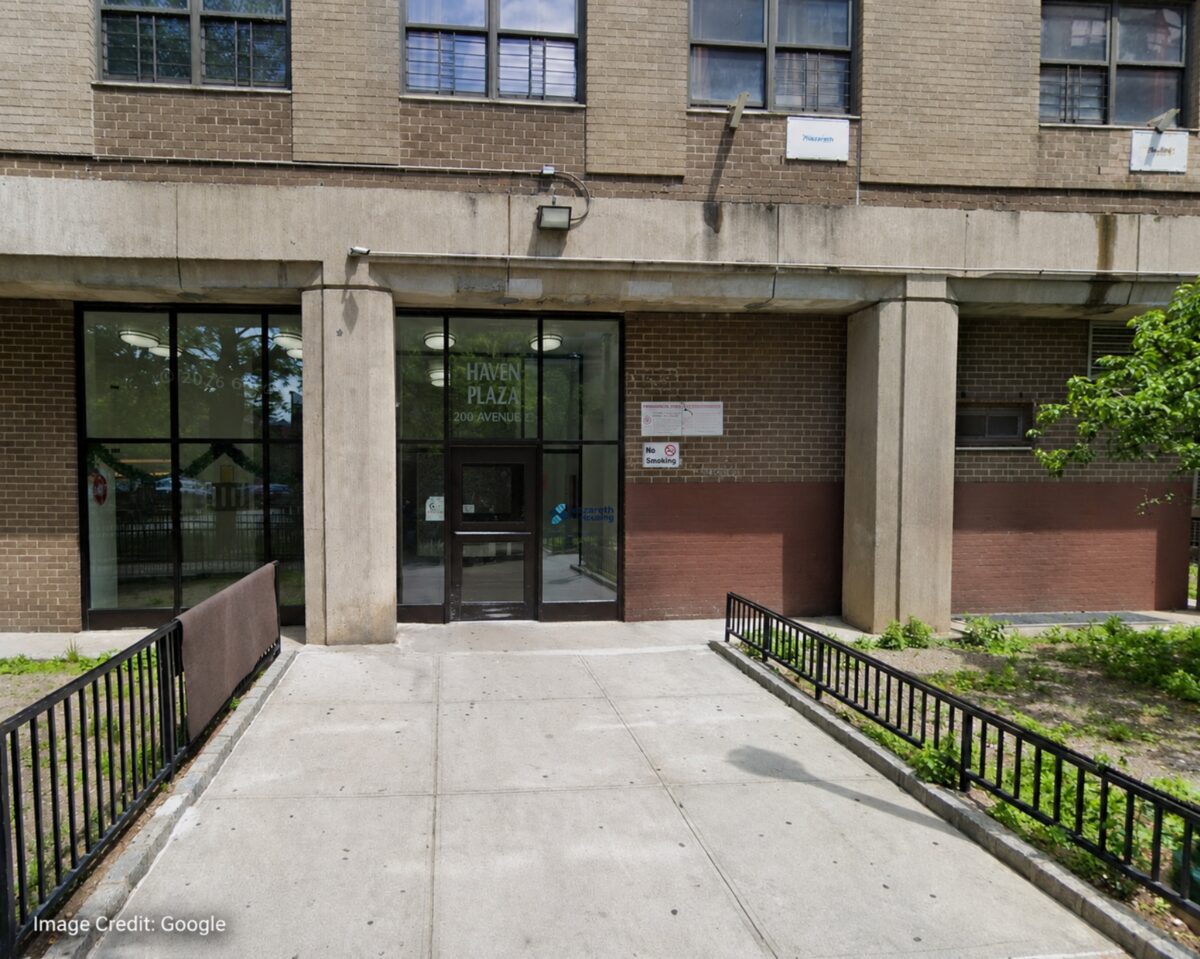
New York City health officials have confirmed Legionella bacteria in the building water system at Haven Plaza, an affordable apartment complex at 200 Avenue C, also known as Loisaida Avenue, in Manhattan’s East Village. Two residents of 1 Haven Plaza were publicly confirmed to have developed Legionnaires’ disease within approximately eleven months, one in June 2025 and another in early May 2026. A third illness has also been reported to a local elected official, although the Health Department initially said it did not have a report confirming that additional case.
Pritzker Hageman’s national Legionnaires’ disease lawyers are investigating the Haven Plaza illnesses, the contaminated building water system, the timing of resident warnings, and the water-management practices that were in place before the cases were identified. If you or a loved one was diagnosed with Legionnaires’ disease after living at, working at, visiting, or providing services at Haven Plaza, call 1-888-377-8900, text 612-261-0856, or contact our legal team online for a free and confidential consultation. You pay no fees ever unless we recover compensation for you.
Haven Plaza Legionnaires’ Disease Investigation: Quick Facts
- Location: Haven Plaza, 200 Avenue C/Loisaida Avenue, New York, NY 10009. The two publicly confirmed patients were reported as residents of 1 Haven Plaza.
- Cases: Two cases have been publicly confirmed. A third case was reported to Council Member Harvey Epstein, and Pritzker Hageman is investigating information indicating at least three known cases.
- Exposure Source: NYC testing found Legionella in the Haven Plaza building water system. Public reporting has focused on the hot-water and plumbing system rather than an outdoor cooling tower.
- Resident Guidance: Residents were advised to avoid showers and to fill bathtubs slowly while testing and remediation proceeded. Follow the most recent building and Health Department instructions because guidance may change after follow-up testing
- Property: Catholic Homes New York lists Haven Plaza as a 371-unit affordable housing complex for families and seniors.
- Investigation: Environmental remediation and follow-up testing were reported as the next steps. Public reports did not provide a final source-matching analysis or a public clearance date.
What happened at Haven Plaza?
The New York Amsterdam News report based on reporting by THE CITY said the NYC Health Department disclosed during a resident call that two tenants in one Haven Plaza building had been diagnosed within the preceding eleven months. The earlier illness occurred in June 2025. The second resident was diagnosed in early May 2026. Both publicly confirmed patients lived in 1 Haven Plaza.
The Health Department advises that when two or more confirmed Legionnaires’ disease cases occur within twelve months among people associated with the same building and shared hot-water system, the agency conducts a building evaluation. NYC explains that building clusters are commonly linked to premise plumbing, most often the hot-water system, where residents can inhale contaminated mist while showering. This is different from a neighborhood cooling-tower cluster.
Early reporting described precautionary guidance while sampling was underway. Residents were told to temporarily avoid showers and to fill bathtubs slowly to reduce aerosol generation. In late June, local reporting stated that Legionella had been detected in the Haven Plaza water system. The Health Department reportedly said remediation and follow-up testing would follow.
Diagnosed after spending time in the affected area?
How many Haven Plaza Legionnaires’ disease cases are known?
Two diagnoses are publicly confirmed in reporting attributed to the NYC Health Department. One case occurred in June 2025 and the second in early May 2026. Patch reported that Council Member Harvey Epstein had been told of a third resident diagnosis, while the Health Department told the outlet that it had no confirming report at that time.
Pritzker Hageman is investigating information indicating that at least three Haven Plaza residents may have been diagnosed. Because the official and reported counts have not been fully reconciled in public records, the most accurate present description is: two publicly confirmed cases, with a third case reported and under investigation.
The difference matters. A resident’s diagnosis can be missed from public summaries because of reporting timing, privacy, jurisdiction, incomplete testing, or uncertainty about whether the case belongs to the cluster. Anyone diagnosed with pneumonia after a possible Haven Plaza exposure should tell the treating clinician about the building investigation and ask whether Legionella-specific testing was performed.
Haven Plaza Legionnaires’ disease timeline
June 2025: First publicly reported case
A Haven Plaza resident was diagnosed with Legionnaires’ disease in June 2025, according to later public reporting. The available articles do not explain whether building ownership or management was notified at that time or whether any building-wide water investigation followed.
Early May 2026: Second resident diagnosed
A second resident of 1 Haven Plaza was diagnosed in early May 2026. Public reporting said the resident was older than 65 and required intensive hospital care.
May 15 and May 19: Resident notice and meeting
Our Town reported that residents received notification letters on May 15 and that an in-person meeting followed on May 19, with additional residents participating remotely. Health officials advised precautions while the building water system was evaluated.
May 21 to May 28: Investigation becomes public
CBS New York reported that the Health Department was evaluating the complex after two diagnoses within a year. The New York Amsterdam News and THE CITY later described the resident call, the shower precautions, and concerns about when residents and management learned of the cases.
June 24 to June 26: Legionella confirmed in building water
Public reporting confirmed Legionella in the Haven Plaza building water system. The Health Department said remediation and follow-up testing would be required.
Ongoing: Case-count and remediation questions remain
Public sources reviewed for this article do not provide a final public clearance date, detailed sampling map, Legionella species and concentration for each positive sample, or a final determination linking a particular water-system component to a particular patient. Those records will be important to residents, investigators, and any future legal claims.
Haven Plaza is a large affordable-housing complex with centralized water infrastructure
Catholic Homes New York identifies Haven Plaza as a 371-unit affordable housing property for families and seniors at 200 Avenue C in the East Village. The organization describes itself as an affordable-housing initiative involving Catholic Charities, the Archdiocese of New York, the Association of New York Catholic Homes, and the New York Institute for Human Development.
Public reporting identified Wavecrest Management as the managing agent. Wavecrest describes itself as a major New York housing-management company responsible for building operations and resident services. Public project materials also describe major renovations and centralized utility infrastructure serving Haven Plaza.
Those facts do not establish legal fault. They do identify the organizations and systems whose records may be relevant to understanding what happened. A responsible investigation should examine ownership, management, maintenance, plumbing, boiler, water-treatment, consulting, laboratory, and contractor records rather than assume that only one entity controlled every part of the water system.
Why Legionella in an apartment building’s water system is dangerous
Legionella bacteria can enter a building in low numbers and multiply when conditions inside the plumbing system support growth. The CDC explains that building water systems can become hazardous when water stagnates, disinfectant levels fall, temperatures enter the growth range, or scale, sediment, corrosion, and biofilm provide shelter and nutrients.
A large apartment complex may have long pipe runs, recirculation loops, storage tanks, boilers, mixing valves, low-use fixtures, dead legs, and temperature differences between floors or buildings. A central hot-water plant can distribute water throughout a complex, which means a failure at one control point may affect many apartments.
Legionnaires’ disease is usually acquired by breathing contaminated mist, not by ordinary person-to-person contact. In an apartment building, exposure can occur through showers, faucets, humidifying devices, or other fixtures that create fine droplets. The NYC Health Department distinguishes building-plumbing clusters from cooling-tower community clusters. That distinction is critical at Haven Plaza because residents were given shower-specific precautions after cases were identified in the same building.
What should an effective apartment-building water management program do?
A written plan is not enough if no one follows it. The CDC’s seven-step water-management framework calls for a qualified team to map the water system, identify locations where Legionella can grow and spread, set measurable control limits, monitor those limits, respond when values fall outside the safe range, verify that the program is being implemented, validate that it works, and document and communicate the work.
For a large apartment complex with centralized hot water, investigators should expect to find clear records addressing:
- Hot-water storage and recirculation temperatures at representative locations.
- Cold-water temperatures and disinfectant residuals.
- Water age, stagnation, low-use branches, and dead legs.
- Boiler, storage-tank, mixing-valve, pump, and recirculation-loop maintenance.
- Flushing schedules and records for vacant or low-use apartments.
- Showerhead, faucet-aerator, filter, and fixture cleaning or replacement.
- Legionella sampling plans, laboratory methods, results, and corrective actions.
- Resident complaints about water temperature, discoloration, odor, pressure, outages, or delayed hot water.
- Construction, renovation, shutdown, boiler failure, flooding, or pressure-loss events that could disturb the system.
- Written communications among the owner, property manager, superintendent, water consultant, plumber, laboratory, and Health Department.
CDC guidance for controlling Legionella in potable water systems emphasizes that no single control measure is enough. A layered program should monitor temperature, disinfectant residual, pH, water age, sediment, and biofilm, and should increase monitoring when values become unstable.
Questions Haven Plaza residents deserve to have answered
- When did each responsible organization first learn of the June 2025 case?
- Was the first case reported to the owner, manager, or water-management contractor? If not, why not?
- What water-management plan was in effect before the first and second illnesses?
- Were hot-water temperatures, disinfectant residuals, and circulation monitored at 1 Haven Plaza and throughout the shared system?
- Which water samples tested positive, where were they collected, and what Legionella species, serogroup, and concentrations were found?
- Did the system have recurring low-temperature, stagnation, balancing, boiler, mixing-valve, or recirculation problems?
- What remediation method was used, when was it completed, and did follow-up cultures remain negative?
- Why were residents advised against showers, and when was that restriction lifted?
- Were point-of-use filters, shower hoses, bottled water, or alternative bathing arrangements provided to vulnerable residents?
- Were residents notified promptly, in multiple languages and accessible formats?
- Were any records altered, discarded, or overwritten after the investigation began?
Who may be legally responsible for a Haven Plaza Legionnaires’ disease case?
Legal responsibility depends on evidence, not simply on a name appearing in a news story. Our Legionnaires’ disease liability investigations examine every person and organization that controlled the water system or performed relevant work.
Potentially responsible parties may include:
- The property owner or ownership entity responsible for safe premises and building systems.
- The property-management company responsible for operations, maintenance, resident communication, and vendor supervision.
- Water-treatment and Legionella consultants responsible for designing, implementing, monitoring, or validating the water-management program.
- Plumbing, boiler, mechanical, maintenance, or remediation contractors.
- Engineering or construction firms if a design or renovation defect created persistent stagnation or temperature-control problems.
- Laboratories if testing, reporting, or interpretation errors delayed corrective action.
A company cannot automatically escape accountability by hiring a contractor. Owners and managers still must select qualified vendors, provide accurate information, respond to warnings, verify that required work is completed, and protect residents. Whether any Haven Plaza party breached a legal duty requires review of the actual records and expert analysis.
Why the first 2025 case matters
The June 2025 case may be one of the most important facts in the investigation. A single Legionnaires’ disease diagnosis does not always prove a building source, and public-health agencies may not conduct full environmental sampling after every isolated case. But the first case creates a critical timeline question: who knew what, when did they know it, and what preventive steps followed?
If building records show prior Legionella detections, recurring hot-water problems, resident complaints, inadequate temperatures, or earlier warnings, the first case could become important evidence of notice. If the owner and manager were not informed of the first diagnosis, the records should establish that as well. The answer should come from documents, not assumption.
What evidence should be preserved now?
Legionnaires’ disease cases are scientifically demanding. Pritzker Hageman’s five-step approach to proving a Legionnaires’ disease claim combines medical, epidemiologic, environmental, and operational evidence.
Residents and families should preserve:
- All Health Department, management, tenant-association, and building notices.
- Emails, text messages, portal notices, flyers, meeting recordings, and photographs.
- Medical records, laboratory results, discharge instructions, pharmacy records, and bills.
- A timeline of symptoms, medical visits, shower use, apartment occupancy, travel, and time away from the building.
- Names of neighbors or staff who discussed illnesses or water problems.
- Receipts for alternative lodging, transportation, home assistance, filters, bottled water, or other outbreak-related expenses.
Residents should not collect water samples or alter plumbing without professional direction. Improper sampling can create misleading results or unnecessary exposure. Follow the Health Department’s and building’s current safety instructions.
Symptoms Haven Plaza residents should not ignore
Legionnaires’ disease is a serious pneumonia. Symptoms typically appear about two to fourteen days after exposure and may include fever, chills, cough, shortness of breath, muscle aches, headache, fatigue, confusion, loss of appetite, nausea, or diarrhea. Read our detailed guide to Legionnaires’ disease symptoms and diagnosis.
People at higher risk include adults age 50 and older, current or former smokers, people with chronic lung disease, cancer, diabetes, kidney or liver disease, and people with weakened immune systems or immune-suppressing medications. Haven Plaza provides housing for families and seniors, making clear, timely communication especially important.
Anyone with compatible symptoms and a possible Haven Plaza exposure should seek medical care promptly and tell the clinician about the building investigation. Ask whether a Legionella urine antigen test and a respiratory specimen for culture or PCR are appropriate. Respiratory culture is especially important in an outbreak because it may allow comparison between the patient’s Legionella isolate and environmental isolates.
What Haven Plaza residents should do now
- Follow the latest building and Health Department instructions. Guidance can change after remediation and follow-up testing.
- Seek immediate medical care for fever, cough, shortness of breath, confusion, or pneumonia symptoms.
- Tell the clinician that Legionella was detected in the Haven Plaza water system and that resident cases have been reported.
- Ask the medical team to preserve respiratory samples when possible. A urine test alone may not provide an isolate for source matching.
- Save every notice and create a written exposure and symptom timeline.
- Review our step-by-step guide on what to do after a Legionnaires’ disease diagnosis.
- Speak with an experienced Legionnaires’ disease lawyer before memories fade and records disappear.
How Haven Plaza differs from the Upper East Side cooling-tower outbreak
New York City has been dealing with two different Manhattan Legionnaires’ disease investigations. The Upper East Side community outbreak involves cooling towers that released mist outdoors across Carnegie Hill and Yorkville. Haven Plaza is a building cluster involving residents of the same housing complex and Legionella found in the building water system.
The difference affects exposure analysis and safety guidance. In a cooling-tower outbreak, people can be exposed while living, working, or walking through a neighborhood. In a building-water cluster, exposure is generally concentrated among residents, employees, contractors, and visitors who use or encounter the building’s plumbing. Residents should not apply general Upper East Side tap-water guidance to Haven Plaza. They should follow the specific Haven Plaza notices.
A newer New York City building-level investigation is underway at North Shore Towers in Queens, where NYC Health is examining the hot water system after resident Legionnaires’ disease diagnoses. Unlike Haven Plaza, Legionella has not yet been publicly confirmed in the North Shore Towers plumbing, so the source remains under investigation. New York City is also responding to a building water-system investigation at Castleton Park Apartments on Staten Island. Two residents were diagnosed within 12 months, Legionella was reported in the complex’s water system, and remediation is underway.
Can a Haven Plaza resident file a Legionnaires’ disease lawsuit?
A resident may have a claim if evidence shows that exposure to Legionella in the Haven Plaza water system caused the illness and that one or more responsible parties failed to use reasonable care. Our page on Legionnaires’ disease lawsuits and compensation explains how medical costs, lost income, pain, disability, future care, and other losses may be recovered.
A positive environmental result is important, but it is not the entire case. The investigation should compare illness timing, residence and travel history, patient testing, environmental sampling, water-system records, and the conduct of each responsible party. Multiple residents becoming ill at the same building can strengthen the epidemiologic evidence, especially when Legionella is also found in the shared water system.
If a resident dies from Legionnaires’ disease, surviving family members may have a wrongful-death claim. No death has been publicly confirmed in the Haven Plaza cluster as of the date of this article.
Pritzker Hageman is investigating the Haven Plaza Legionnaires’ disease cases
Pritzker Hageman represents people and families harmed by Legionnaires’ disease throughout the United States. Our attorneys work with medical, epidemiology, microbiology, plumbing, water-management, and engineering experts to determine where exposure occurred and what failures allowed it to happen.
If you were diagnosed after a Haven Plaza exposure, or if you are the family member of a resident who developed severe pneumonia, contact us as soon as you are able. Early investigation can preserve water records, electronic data, notices, samples, and witness memories before they are lost.
Contact Eric Hageman and his Legionnaires’ Disease legal team today and find out how you can get compensation and justice
1-888-377-8900 (Toll-Free) | [email protected]

Call 1-888-377-8900, text 612-261-0856, or request a free consultation online. We handle Legionnaires’ disease cases on a contingency fee, which means you pay no fees ever unless we recover compensation for you.
Frequently asked questions about the Haven Plaza Legionnaires’ disease outbreak
Two residents of 1 Haven Plaza have been publicly confirmed as diagnosed within approximately eleven months. Council Member Harvey Epstein said he had been told of a third case, while the Health Department initially said it did not have a confirming report. Pritzker Hageman is investigating information indicating at least three known cases.
Catholic Homes lists Haven Plaza at 200 Avenue C, also known as Loisaida Avenue, New York, NY 10009. The complex is in Manhattan’s East Village and contains 371 affordable apartments for families and seniors.
Public reporting states that the two confirmed patients lived in 1 Haven Plaza. Because Haven Plaza uses centralized and interconnected building infrastructure, investigators should determine which buildings and apartments share relevant hot-water components.
Yes. Public reporting said NYC testing detected Legionella in the Haven Plaza building water system. Public reports did not provide all sample locations, concentrations, species, or final source-matching results.
Residents were advised to avoid showers and fill bathtubs slowly during the investigation. The current answer depends on the latest remediation and follow-up testing. Residents should follow the newest written instructions from NYC Health and building management rather than rely on an older news article.
People usually develop Legionnaires’ disease by inhaling contaminated water mist. Aspiration, when water enters the airway instead of the stomach, can also cause exposure in some circumstances. The disease is not ordinarily spread from one person to another.
Clinicians often use a urine antigen test, but it mainly detects Legionella pneumophila serogroup 1. A respiratory specimen for culture or PCR can detect additional Legionella types, and culture may provide an isolate that can be compared with bacteria recovered from the building.
The precise division of responsibility depends on ownership documents, management agreements, contracts, and actual conduct. Building owners and managers generally control safe premises and vendor oversight. Water-treatment, plumbing, mechanical, engineering, laboratory, and remediation contractors may also bear responsibility if their work contributed to the failure.
Yes. Medical care comes first, but an initial legal consultation can occur while you are recovering or hospitalized. Family members can contact the firm on a patient’s behalf. Early action can help preserve records and evidence.
Sources and reporting reviewed
- NYC Health Department: Legionnaires’ disease and building evaluations
- New York Amsterdam News/THE CITY: two Haven Plaza cases and resident precautions
- PIX11: Legionella confirmed in the Haven Plaza water system
- West Side Spirit: Legionnaires’ disease detected at Haven Plaza
- Our Town: initial Haven Plaza investigation and resident meeting
- Our Town: Legionella detected in the Haven Plaza water system
- CBS New York: East Village Haven Plaza evaluation
- Patch: reported third case and Health Department response
- Catholic Homes New York: Haven Plaza property information
- CDC: water-management programs
- CDC: controlling Legionella in potable water systems
- New York State Health Department: Legionnaires’ disease prevention and remediation
Additional Pritzker Hageman Legionnaires’ disease resources
- Legionnaires’ disease lawyers and lawsuits
- Legionnaires’ disease symptoms and diagnosis
- Where Legionnaires’ disease comes from
- What to do if you contract Legionnaires’ disease
- How we prove a Legionnaires’ disease case
- Determining liability for an outbreak
- Lawsuits and compensation
- Wrongful-death lawsuits
- Frequently asked questions
- Recent Legionnaires’ disease news and outbreak posts
We have obtained 100+ separate verdicts and settlements greater than $1 million:
We obtained this result on behalf of three people sickened in a Legionnaires’ disease outbreak at a resort hotel.
We obtained this settlement on behalf of six people impacted by a Legionnaires’ disease outbreak linked to a hotel hot tub.
Our client contracted Legionnaires’ disease at a hotel and was hospitalized for eight weeks.
We obtained this settlement on behalf of the family of a woman who died after contracting Legionnaires’ Disease.
We obtained this result on behalf of clients who contracted Legionnaires’ disease from a hotel HVAC cooling tower.
On behalf of a client sicked from contaminated water at a senior care facility.
Our client contracted Legionnaires’ disease at a hotel and was hospitalized for over a month.
On behalf of a women hospitalized for over two months from a contaminated hotel hot tub in Myrtle Beach.
We obtained this settlement for a woman sickened with Legionnaires’ disease after being exposed in a hotel hot tub.
We obtained this settlement for the family of a 52-year old man who died of Legionnaires’ disease linked to a hotel.
We collected this on behalf of a client who contracted Legionnaires’ disease from contaminated water at a hotel.
We recovered this settlement for the family of a 50-year old man who died of Legionnaires’ disease after being exposed to legionella bacteria at a hotel.
Collected on behalf of the family of a man who died as a result of Legionnaires’ Disease contracted while staying at a Wisconsin resort.
We obtained this on behalf of a man hospitalized after Legionella bacteria exposure at a hotel.
See more settlements & verdicts.
The Pritzker Hageman law firm and our attorneys have been recognized in:
U.S. News & World Report

Pritzker Hageman has been recognized as one of the best law firms for personal injury litigation by U.S. News & World Report every year the award has been given since 2012.
Super Lawyers®, Thomson Reuters

Attorneys at Pritzker Hageman have been awarded the peer selected Super Lawyers distinction every year since 2004.
America’s Top 100 Attorneys®

Lifetime Achievement selection to America’s Top 100 Attorneys®.
Three Time Attorneys of the Year

Pritzker Hageman lawyers have been named Attorneys Of The Year by Minnesota Lawyer three times.