
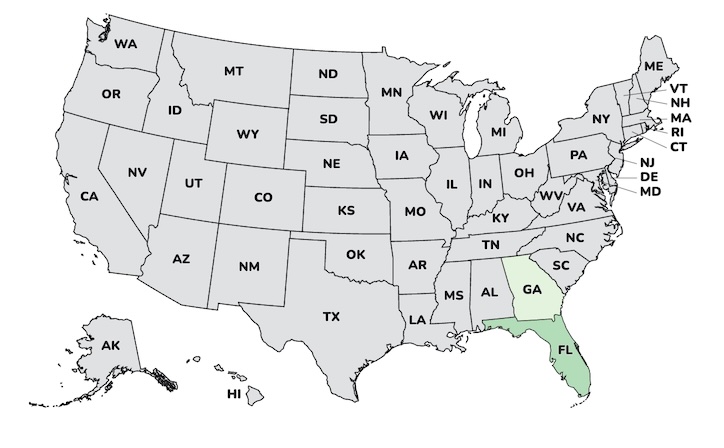
Updated July 31, 2026 – Frozen GreenWise-brand organic blueberries are the source of an E. coli outbreak that includes 12 illnesses in Georgia and Florida. Four people have been hospitalized.
GreenWise is a Publix store brand. Publix and Frutas y Hortalizas del Sur S.A. of San Carlos, Chile, have issued recalls for the blueberries.
Federal regulators have taken two steps against the Chilean company that supplied the frozen organic blueberries linked to an E. coli outbreak, and the associated recall has grown to cover every lot of two Publix store-brand products.
Do You Need an E. coli Lawyer?
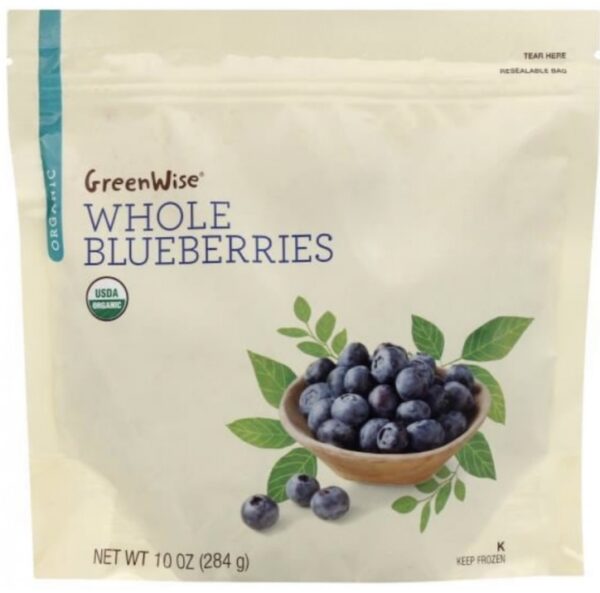
GreenWise Frozen Organic Blueberries Recall
The recall has been expanded. On July 29, 2026, Publix recalled all lots of GreenWise Organic Whole Blueberries and GreenWise Organic Whole Mixed Berries, in both 10 ounce and 48 ounce sizes. The earlier recall announced on July 3 covered only one lot of one product. If you checked your freezer against that lot code and found nothing, check again against the list below.
The recalled products are:
- GreenWise Organic Whole Blueberries, 10 ounce, UPC 41415-06453
- GreenWise Organic Whole Blueberries, 48 ounce, UPC 41415-12053
- GreenWise Organic Whole Mixed Berries, 10 ounce, UPC 41415-06753
- GreenWise Organic Whole Mixed Berries, 48 ounce, UPC 41415-12153
All lots are included, so there is no lot code or best by date to check. If you have any of these four products, do not eat them. Throw them away or return them to Publix for a refund. Publix says the products have been unavailable for sale since the end of June 2026, when it placed them on an internal stop sale.
Publix describes the expansion as further action taken out of an abundance of caution, based on the traceback and epidemiological information developed by public health officials. The announcement is posted on FDA’s recall page for the Publix expansion.
The recalled blueberries were sold at Publix retail stores in eight states: Alabama, Florida, Georgia, Kentucky, North Carolina, South Carolina, Tennessee, and Virginia.
FDA conducted what it calls a remote regulatory assessment, effectively a remote inspection, of Frutas y Hortalizas del Sur S.A. of San Carlos, Chile, the supplier of the recalled blueberries. FDA has since added the firm’s products to Import Alert 99-35.
An import alert of that kind allows FDA to detain a company’s shipments at the border without physically examining them first. In practice it shifts the burden onto the firm to show its product is not adulterated before it can enter the country. It applies going forward, to future shipments, rather than to product already in freezers.
GreenWise Frozen Blueberries E. coli Outbreak
An E. coli O145 outbreak linked to recalled frozen blueberries sold at Publix stores includes 12 illnesses and four hospitalizations. Patients, who range in age from 2 to 88 years old, reported the onset of Illness on dates ranging from May 11, 2026, to June 5, 2026.
During interviews with health officials, 78 percent of patients said they had eaten blueberries before they developed symptoms of an E. coli infection.
DNA fingerprinting performed on E. coli cultures from patients shows a close resemblance, indicating that they were exposed to the same contaminated food source.
Frutas y Hortalizas del Sur S.A. is the identified supplier and grower of the recalled berries. Publix is the retailer that sold them under its own GreenWise store brand. Identifying the supplier narrows who is primarily responsible, but it does not clear the company that sold the product to the public.
Symptoms of an E. coli O145:H28 Infection
Symptoms of an E. coli infection, which include fever, abdominal cramps, and diarrhea that is sometimes bloody, usually develop within three to four days of exposure. Over-the-counter anti-diarrheal medications and antibiotics should not be given to patients with E. coli infections as they can increase the chance of developing hemolytic uremic syndrome (HUS), a form of kidney failure that is often fatal.
Symptoms of HUS
Symptoms of HUS usually develop within a week of initial E. coli symptoms. Anyone with HUS symptoms should seek immediate emergency care.
HUS symptoms include:
- Pale skin
- Unexplained bruising
- Extreme fatigue
- Decreased urination
- Bloody diarrhea
- Shortness of breath
- Swelling in legs, feet, or ankles
What to Do if You Ate Blueberries and Got Sick
If you ate GreeWise frozen blueberries purchased from Publix and developed symptoms of an E. coli infection including diarrhea, stomach cramps, vomiting, or bloody diarrhea, you should:
- See a doctor right away. Mention your exposure to blueberries recalled for E. coli and ask if you should be tested for E. coli O145.
- Create a food history. Make notes about what you ate and when symptoms started.
- Report your illness to your local health department. If you test positive for E. coli, make sure your illness is reported to public health officials. They use reports of illness and lab testing to identify outbreak cases.
- Save your records. Keep receipts, delivery app records, medical records, and lab results. Keep the packaging or the receipt if you still have it, even a photograph of the UPC.
- Contact an experienced E. coli lawyer. If you or your child developed a serious E. coli infection or hemolytic uremic syndrome after eating a recalled product, the food safety lawyers at Pritzker Hageman answer questions at no charge and with no obligation. The firm represents people with serious foodborne illness injuries nationwide.

How Can Our Lawyers Help You?
1-888-377-8900 (Toll-Free) | [email protected]
Frequently Asked Questions
Are Blueberries a Common Source of E. coli Outbreaks?
E. coli outbreaks are often linked to leafy greens or ground beef; berries aren’t a common source of E. coli outbreaks.
- In 2011, an E. coli O157:H7 outbreak linked to fresh strawberries sold at roadside stands and farmers’ markets sickened 15 people in Oregon. Seven people were hospitalized, and one person died.
- In 2006, an outbreak linked to a mix of blueberries and strawberries sickened five people.
Can I Sue a Grocery Store?
Yes. If there is evidence to support your claim, you may be able to sue a grocery store, such as Publix, for food poisoning.
Doesn’t Freezing Kill E. coli?
No, E. coli goes into a dormant state when frozen; it doesn’t die. When thawed, the bacteria can become active again.
What is E. coli O145?
E. coli O145 is one of a handful of Shiga-toxin-producing E. coli (STEC) bacteria. Shiga toxins are poisonous to humans and cause severe illness, producing bloody diarrhea, hemorrhagic colitis, hemolytic-uremic syndrome (HUS), and thrombotic thrombocytopenic purpura (TTP).
Regulatory agencies focus testing on the most common STEC – E. coli O157:H7; so O145 infections are most likely underreported. Other non-O157 STEC include O26, O45, O103, O111, and O121.
Related

Other E. coli O145 Outbreaks, Recalls
E. coli O145 Recalls
Beef trim and ground beef products were recalled for E. coli O145 four times between 2014 and 2026, according to information from the U.S. Food and Drug Administration’s Food Safety and Inspection Service (USDA FSIS).
E. coli O145 Outbreaks
Previous E. coli O145 outbreaks were linked to ground beef, shredded lettuce, and other sources. At least two of them included fatalities.
Fatal 2025 E. coli O145 Outbreak
In April 2025, an E. coli O145 outbreak linked to an unknown food source caused 11 illnesses, three hospitalizations and one fatality. Because the U.S. Food and Drug Administration (FDA) investigated the outbreak, the source was likely not a meat or poultry product, as those are investigated by the U.S. Food and Drug Administration’s Food Safety and Inspection Service (USDA FSIS).
2024 E. coli O145 Outbreak
In December 2024, the FDA investigated an E. coli O145 outbreak that caused eight illnesses. A food source was not identified.
In its outbreak report, the FDA stated that no companies or ingredients could be identified due to limited purchase information from those who were sick.
2021 E. coli outbreaks
In January 2021, USDA FSIS investigated an E. coli O145 outbreak where ground beef was the suspected source. The number of people sickened was not released.
In April, 2021, the FDA investigated an E. coli O145 outbreak that caused 16 illnesses. A food source was not identified.
2012 Fatal O145 Outbreak
In 2012, a nine-state E. coli O145 outbreak sickened sickend 18 people. Four people were hospitalized, and one person died,
2010 Shredded Lettuce E. coli O145 Outbreak
A 2006 E. coli O145 outbreak sickened 33 people in five states; 12 people were hospitalized, three of them developed HUS.
Experienced E. coli Lawyers
If you developed an E. coli infection from contaminated blueberries and would like a free consultation with an experienced E. coli lawyer, please contact our E. coli Legal Team.. You can reach us by calling 1-888-377-8900, sending a text to 612-261-0856, or by completing the form below. The consultation is free, and there is no obligation.