
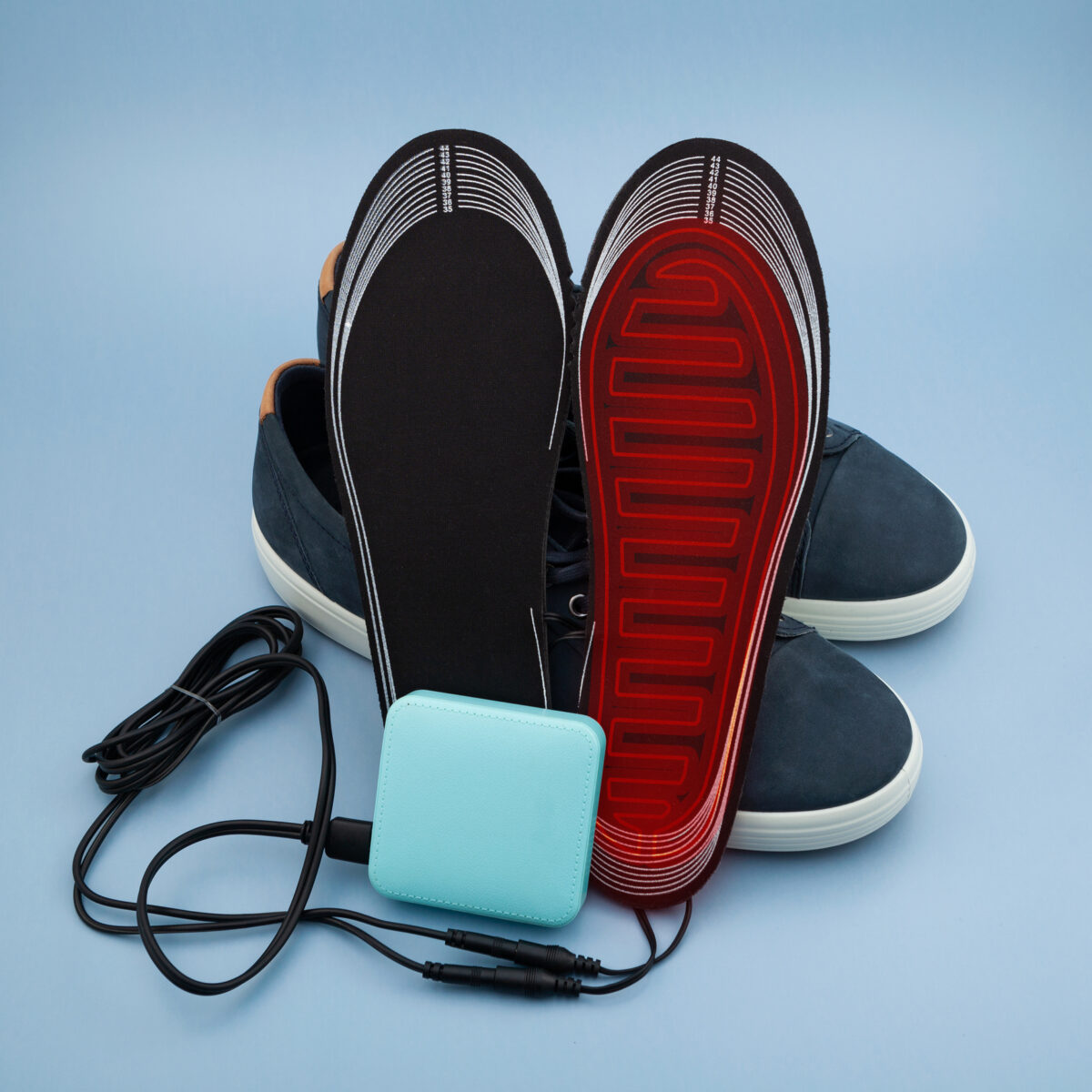
Electric foot warmers – including battery-powered heated insoles and socks – have caused severe burn injuries in recent years. These popular winter gadgets promise warm feet during hunting, fishing, or skiing trips, but hidden dangers have emerged. Reports from burn centers and regulators show that some lithium-ion powered foot warmers have overheated or even exploded, causing full-thickness burns (third-degree burns) to users’ feet. Victims have been hospitalized with devastating injuries, underscoring a serious safety issue that Pritzker Hageman’s burn injury lawyers are helping to address nationwide.
Why Heated Insoles and Electric Socks Can Explode or Overheat
Many electric foot warmers use rechargeable lithium-ion batteries embedded in insoles or attached to socks. Lithium-ion batteries are powerful but can be volatile if poorly made or damaged. When these batteries fail or short-circuit, they can enter thermal runaway – a chain reaction of escalating heat that can burn feet within seconds.
Several factors make foot-warming devices particularly risky:
- Enclosed Space: A battery sealed inside a shoe or sock traps heat. The confined environment of a boot can cause even a small battery failure to escalate into a fire.
- High Heat Output: Lithium-ion battery fires burn at extremely high temperatures, much hotter than boiling water or grease. Lithium battery fires burn hundreds of degrees hotter than boiling water or even boiling oil.. This intense heat can burn through socks, shoes, and flesh within moments.
- Difficulty Removing Device: If an insole ignites while in a boot, it’s challenging to remove quickly. People may struggle to get boots or pants off fast enough to prevent injury. The longer the burning battery stays in contact with skin, the deeper the burn will be.
- Can burn even When Powered Off: Alarmingly, these batteries can ignite even when the device is turned off. The CPSC (Consumer Product Safety Commission) found that defective insoles could explode during normal use, storage, or charging. In one recent case a Minnesota man’s heated insoles weren’t even turned on when they exploded and burned his feet.
Legal Rights of Burn Victims: You May Be Entitled to Compensation
Severe burns from a defective product are not only painful but also financially burdensome. Medical bills for burn treatment (ER visits, skin graft surgeries, hospital stays, therapy) can be enormous. If you or a loved one suffered a burn injury from a faulty heated insole, sock, or other foot warmer, you have legal options.
Product liability law allows injured consumers to seek compensation from the manufacturers or sellers of dangerous products. In fact, a burn victim can potentially recover damages from any company in the product’s distribution chain, including the maker, importer, and retailer. This means companies that design, manufacture, or sell an unsafe foot warmer can be held legally responsible for the injuries and losses that result.
Typical damages in a burn injury case include:
- Medical costs: surgery, hospitalization, medications, rehabilitation, skin grafts, etc.
- Lost income: if you miss work during recovery or have reduced earning capacity due to permanent injuries.
- Pain and suffering: for the physical agony of the burns and the emotional distress and trauma (burns are among the most painful injuries).
- Disability and disfigurement: compensation for any lasting impairment (e.g. loss of toes, mobility limitations) or significant scarring.
- Related expenses: such as home care, mobility aids, or home modifications if needed during recovery.
Because many of these dangerous foot warmers are made by overseas companies that evade recalls, pursuing a legal claim may be the only way to hold them accountable. Lawsuits can not only provide financial relief to the injured, but also help spur greater safety by putting pressure on manufacturers and retailers (like Amazon, Walmart and sporting goods stores) to remove hazardous products. Online marketplaces have faced lawsuits for selling unsafe electronics and, depending on the jurisdiction, retailers might share liability if they sold a defective product that caused harm.
You can talk with our experienced product liability attorneys. We can investigate the incident, preserve the evidence, and identify all liable parties – whether it’s the manufacturer, distributor, or seller of the foot warmer. Because there are usually time limits, called statutes of limitation, beyond which you cannot file a claim, please contact an attorney right away.

How Can Our Burn Injury Lawyers Help You?
1-888-377-8900 (Toll-Free) | [email protected]
We have obtained 100+ separate verdicts and settlements greater than $1 million:
We obtained this settlement for a man who lost his arm and leg in a gas pipeline explosion.
Our client suffered a traumatic brain injury and burn injuries over 60% of his body in an explosion caused by improperly-odorized propane.
Our client suffered burn injuries over 50% of her body when a compressed natural gas line ruptured in a factory, causing an explosion.
See more settlements & verdicts.
Recent Incidents of Heated Foot Warmers Causing Burns
Numerous real-world incidents illustrate the dangers:
- Hunter’s Boot Fire (Pennsylvania, 2025): A hunter in Northampton County, PA suffered severe burns when the battery in his heated insoles overheated and ignited inside his boots. The device burned through his sock and skin, landing him in a regional burn center. Doctors noted this is part of a growing trend of “deep, devastating burns” from wearable electronics.
- Fisherman’s Exploding Insoles (Minnesota, 2024): Tyler Morris of Trimont, MN was setting up an ice-fishing house when “it felt like a knife stabbed me in my heel… then it started getting super hot,” he recalled to people magazine. White smoke poured from his boot as the year-old rechargeable insoles exploded. Tyler suffered second- and possible third-degree burns to his foot, lost sensation in some areas, and faced a potential skin graft. “I never imagined this would be an issue,” he told reporters. Doctors at Hennepin Healthcare Burn Center informed him that they see these injuries frequently – in fact, that burn unit treated three patients with similar heated insole burns earlier that same winter.
- Three Cases Requiring Surgery: A 2025 medical report documented three separate cases of full-thickness (third-degree) foot burns caused by exploding heated insoles. All three victims required surgical skin grafting to treat their injuries. These cases, published in the Journal of Burn Care & Research, highlight the pattern of burn injuries that is emerging from these heating devices.
- Other Device Fires: Burn surgeons note that other battery-powered gear – not just foot warmers – have caused similar injuries. Lozano and colleagues report burns from electric heated gloves, vape pens, drones, phones, and e-bikes when their lithium batteries failed. In each case, when a battery explodes on the body, it can cause instant severe burns.
Why are these burns so severe? The combination of extreme heat and prolonged contact leads to deep tissue damage. A third-degree burn (full thickness) can occur from “instantaneous contact at just 156°F”, but lithium battery flames far exceed that. These burns often penetrate down to muscle and bone, sometimes costing victims toes or even the entire foot if infection sets in. Unlike a superficial burn, a lithium-battery burn to the foot can destroy the thick sole skin and underlying structures, leading to lifelong pain and mobility issues.
Victims typically require specialized burn care. Many need excision of dead tissue and skin graft surgeries to heal. Recovery can take months, and even with successful grafts, the new skin on the foot will never be as resilient as the original. Patients often endure intense pain, risk of infection, and emotional trauma during, and even long after, the healing process.
Recent CPSC Warnings and Recalls for Defective Foot Warmers
In response to these incidents, U.S. safety regulators have taken action. The Consumer Product Safety Commission (CPSC) has issued urgent warnings and product recalls for specific heated insole and sock products:
- “iHeat” Heated Insoles: In July 2025, CPSC warned consumers to immediately stop using iHeat insoles sold on Amazon. The internal lithium battery in these insoles was found to explode and ignite even when turned off, posing a serious burn and fire hazard. CPSC received 11 reports of fires or explosions with iHeat insoles, including 8 reports of people suffering second- and third-degree burns. The manufacturer (made by Chinese firm Zhangfengqing, marketing as “iHeat”) did not respond to CPSC. Owners were urged to dispose of iHeat insoles as hazardous waste (not in regular trash) because of the battery fire risk.
- “Tajarly” Heated Insoles: In September 2025, CPSC added Tajarly heated insoles (another Amazon-sold brand) to the warning list. These black, remote-controlled insoles (made by Shenzhen Tejiali Tech, China) had at least 4 reported thermal incidents, including ignitions that caused burn injuries and 2 cases of severe burns requiring extended hospital stays. Like iHeat, the Tajarly insoles can overheat and catch fire even when not in use. The manufacturer refused to cooperate with U.S. regulators on a recall. Consumers are again advised to stop using them and dispose of them through hazardous waste facilities.
- Fieldsheer Heated Socks: Not only insoles are a problem – even electric heated socks have been recalled for causing burns. In August 2025, Fieldsheer Apparel Technologies recalled 45,000 pairs of its merino wool battery-heated socks after multiple injury reports. These socks contain two small lithium battery packs. According to the CPSC, during high-intensity activities (which generate friction, moisture, and pressure), the socks can cause excess heat and hotspots, leading to blistering burns on the feet At least 4 users suffered burns or blisters (out of 11 reported cases of pain) before the recall. Fieldsheer offered full refunds or replacements and instructed customers to stop using the socks immediately. Even well-known brands can pose burn hazards if their design allows dangerous heat buildup.
- Other Products: Consumers should be aware that many heated apparel products lack proper safety certification. The CPSC warnings above involved products largely sold online (Amazon) by overseas manufacturers without U.S. safety approval. Safety experts recommend looking for products tested to UL safety standards and being cautious with any device that includes a lithium battery worn on the body. There is a wide-spread problem of cheaply made, lithium-powered warming gadgets flooding the market.
Safety Tips: How to Prevent Foot Warmer Injuries
If you own electric foot warmers or are considering them, exercise caution:
- Stop Using Recalled or Warned Products: If you have iHeat or Tajarly insoles, Fieldsheer heated socks, or any product that has been subject to a safety warning, discontinue use immediately. Follow CPSC guidance to dispose of defective lithium batteries properly – do not toss them in household trash.
- Watch for Warning Signs: Overheating, swelling, or odd smells from the battery pack are red flags. If a foot warmer malfunctions or its battery shows damage, turn it off and remove it as safely as possible.
- Have an Exit Plan: When using any battery-powered warmer, ensure you can quickly remove the device. For heated socks, know how to detach the battery pack swiftly. For insoles, if you feel unexpected heat or pain, remove your shoes immediately to prevent prolonged contact with the battery.
- Use Alternatives: Consider chemical heat packs (like HotHands® warmers) as a safer alternative for foot warmth. These generate warmth without electrical components. Also, invest in high-quality insulated boots and thermal socks as passive insulation poses no explosion risk.
- Buy Quality, Certified Devices: If you do opt for electric warmers, purchase from reputable brands that certify compliance with UL or other safety standards (such as the European CE standard). Avoid no-name cheap products with lithium batteries. Research any device for recalls or incident reports. As one victim cautioned, “do research before buying rechargeable apparel items, especially made from overseas, or avoid them altogether”. Also, be aware that some cheap overseas brands may claim to be UL or CE certified on their product listing, but are in fact not.
- Never Leave Charging Unattended: Charge battery packs in a safe area away from flammable materials and never overnight. Overcharging can damage lithium cells. Unplug once fully charged.
Finally, if an incident does occur, treat it as a burn emergency. Remove the heat source (if possible), cool the burn with water, and seek immediate medical care. Lithium battery burns are deep injuries that almost always need professional treatment and possibly surgery.
How Pritzker Hageman Can Help Burn Victims Nationwide
Pritzker Hageman is a nationally recognized law firm with a dedicated Burn Injury Legal Team. Our explosion and burn injury attorneys have decades of experience helping clients injured by fires, explosions, and defective products. We have won numerous multi-million-dollar recoveries for burn survivors and their families. We represent burn injury clients throughout the United States, and we are ready to investigate incidents involving heated insoles, socks, or other electric warming devices.
When you hire our team, we will:
- Listen and advise: We know how traumatic burn injuries are. We will review your case, answer your questions, and explain your legal options at no cost.
- Investigate the product: Our attorneys work with specialized experts in fire investigation and engineering. We will find out how and why the device failed – whether due to a design defect, manufacturing flaw, or inadequate warnings.
- Hold wrongdoers accountable: We will identify all responsible parties – the product manufacturer, middlemen, and potentially retailers – and pursue justice on your behalf. Our goal is not only to get you compensation but also to force changes so this doesn’t happen to someone else.
- Maximize your compensation: We fight to recover everything you are entitled to, including medical bills, wage loss, and damages for pain, suffering, and permanent effects. Our track record includes some of the largest burn injury settlements in the country, because we leave no stone unturned.
- No fee unless we win: It costs nothing upfront to hire us – we only get paid if we recover money for you. This contingency fee arrangement means you can pursue a case regardless of your financial situation.
Your focus should be on healing; our job is to handle the legal battle and hold the makers of these dangerous devices accountable. If you have questions about a burn injury from an electric foot warmer or any other product, feel free to reach out. Even if you aren’t ready to file a lawsuit, we can talk with you about what happened and what steps to take.
Contact Us for a Free Consultation
Pritzker Hageman’s burn injury attorneys are here to help. Contact us today for a free, no-obligation consultation – we will listen to your story and advise you of your rights. You can reach us by phone at 1-888-377-8900 or by filling our our online contact form. There is no cost to you unless we win your case. Our team is compassionate with clients yet aggressive in the pursuit of justice against those who caused harm.
Burn injuries from heated insoles and socks are preventable tragedies. By taking legal action, you may not only secure your family’s future, but also help make these products safer for everyone. Pritzker Hageman is committed to achieving both goals – justice for you and improved safety standards industry-wide
How Can Our Lawyers Help You?
Phone: 1-888-377-8900 | Text: 612-261-8856 | [email protected]
The Pritzker Hageman law firm and our attorneys have been recognized in:
U.S. News & World Report

Pritzker Hageman has been recognized as one of the best law firms for personal injury litigation by U.S. News & World Report every year the award has been given since 2012.
Super Lawyers®, Thomson Reuters

Attorneys at Pritzker Hageman have been awarded the peer selected Super Lawyers distinction every year since 2004.
America’s Top 100 Attorneys®

Lifetime Achievement selection to America’s Top 100 Attorneys®.
Three Time Attorneys of the Year

Pritzker Hageman lawyers have been named Attorneys Of The Year by Minnesota Lawyer three times.
Sources:
- Stephanie Sigafoos, Lehigh Valley News – “Hunter severely burned after heated insole explodes; surgeon warns of rising lithium-ion injuries” (Dec. 8, 2025).
- David Chiu, People – “Man Sustains Second-Degree Burns After Heated Insole ‘Exploded’ in His Boot” (Dec. 22, 2024).
- U.S. Consumer Product Safety Commission – Product Safety Warning for iHeat Heated Insoles (July 10, 2025)cpsc.govcpsc.gov; Product Safety Warning for Tajarly Heated Insoles (Sept. 4, 2025).
- U.S. Consumer Product Safety Commission – Recall Notice: Fieldsheer Heated Socks (45,000 pairs recalled Aug. 7, 2025).
- Justia – “Strict Liability in Personal Injury Lawsuits” (Legal doctrine holding manufacturers/distributors liable for defective products).