
Nashville-based WKRN-TV has reported that a poorly maintained air conditioning unit in Williamson County’s County Clerk’s office may be responsible for the Legionnaire’s Disease contracted by a long-time employee two weeks ago, requiring treatment at Williamson Medical Center. When asked by WKRN-TV News 2 for official confirmation of the case, Tennessee Department of Health representative Bill Christian responded in an email, “We do have a confirmed case of Legionnaires’ disease in the Mid-Cumberland region. The Tennessee Department of Health does surveillance for diseases like Legionnaires’ disease and we do not have any other cases. As always, we cannot provide any information on individuals or cases.”
 Speaking on the condition of anonymity, other deputy clerks in the office have described the state of the air conditioning unit which they believe has sickened several over the years. “[It’s] one thing after another,” [one] employee said. “Someone is always sick in there. It was leaking all over the carpet. The filter was black and green and slimy. Even the maintenance man was like, ‘Oh my gosh! This hasn’t been changed in years.'” A co-worker attests that “Almost every woman who works in front of the units has breathing problems.”
County Mayor Rogers Anderson has announced that testing of the suspect HVAC system has commenced and should be completed by this weekend: “Normally, these [bacteria] occur in a cooling tower, not a loop system. We have both here,” he told News 2.
Who Is At Risk for Legionnaire’s Disease?
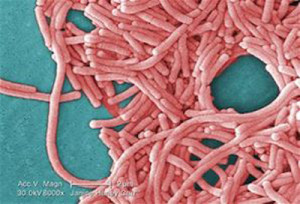
The victim, a woman in her 50s, fits the demographic of those who most frequently contract the Legionella bacteria, which causes a potentially deadly form of pneumonia. People who are most at risk for the disease are those older than 50, current or former smokers, individuals with chronic lung disease, and people with weakened immune systems. Both Legionnaire’s Disease and a less severe infection, Pontiac Fever, occur when people breathe water vapor from improperly maintained water or plumbing systems. Of those patients who contract full-scale Legionnaire’s Disease, 5% to 30% die.
What Are the Symptoms?
Initial symptoms of Legionnaire’s Disease present within 2 – 14 days of exposure to the bacteria; they include respiratory symptoms such as a cough or shortness of breath, headaches, muscle aches, and high fever.
To learn more about the steps you should take following a diagnosis of Legionnaire’s Disease, you can contact Fred at 1-888-377-8900 or use our free online consultation form.